Why Adventurous Adults Should Get Over Their Egos and Take a Damn Lesson

Why Adventurous Adults Should Get Over Their Egos and Take a Damn Lesson

Author Photographer
  • Tamara Susa, Surf Synergy

Field Mag's Dirtbag-in-Residence asks: Why don’t aging mountain jocks take lessons? And then signs up for surf school in Costa Rica

Published: 06-09-2026

Updated: 06-10-2026

A few months ago, my eight-year-old daughter changed how I mountain bike forever. I was pretending to be a student with her in the front yard. She led me through an exercise, in an adorable, faux-deep instructor’s voice, that rapidly cycled me through the different positions I should put my pedals and body in depending on what I was encountering on a trail. "Thank you, teacher!” I said in my high-pitched, super-cringe student voice. Meanwhile, my brain exploded with what her instruction would mean for my daily rides.

I love mountain biking. So much so that my mountain bike represents one of the top five most expensive purchases I've made (behind my home and my truck). There are times of the year when I mountain bike every day of the week. But I never gave much thought about where I was putting my pedals during a descent. I’ll spare you the detailed breakdown of my progression, but that lesson, delivered by my daughter and parroted directly from what she learned from her instructor at Ashland DEVO, our local youth mtb program, has made every second of my descents since more controlled, safer, and more enjoyable.

It also rustled up a question: Why haven’t I ever taken a mountain biking lesson? To that point, I hadn’t taken a ski, surf, or whitewater kayaking lesson in 30 years. I tell people that these sports have defined my adult life. Every job I have ever had as an adult is deeply linked to these sports, but I've been bumbling through the actual doing of these sports, deaf to the instruction that could have helped me out of the ruts I encountered, for three decades. I have bandied about the following quote from Hunter S. Thompson for years, not knowing that I was absolutely one of the people he was talking about: “He that is taught only by himself has a fool for a master.”
surf-synergy-surfing-group-paddling-daytime

Courtesy Surf Synergy

Adults Don't Take Lessons

I am not the only fool follower. I took a cross-sectional survey of a dozen of my mountain jock friends (all dudes, for the record), asking them when the last time was that they took a lesson in one of the sports we have spent thousands of collective hours doing together. None had sought out instruction in a decade or more.

Casey Botts, founder of Ashland DEVO, told me he has trouble filling their adult clinics but is bursting at the seams for kids' programming. “I think it takes somebody to drop their ego and say, ‘I want to get better at something.’ It doesn’t even matter what that thing is, but if you have that attitude, you’re way more likely to learn from somebody. For kids, it’s just built in. For adults, there’s more resistance.” I have to wait by the computer like I'm getting Coachella 2011 tickets to get my daughter signed up for a kids class, but DEVO will have plenty of room for me to take an adult lesson this season. There's proof of the resistance Botts is talking about.

Botts battles ruts even in the sponge-like minds of his students. He has every member of DEVO, from the seniors in high school dominating races in the west to my daughter, drilling the basics every single lesson. “You have to build that mindset of ‘we’ve got to practice,’” Botts said. “You wouldn't buy a $2,000 guitar and sit down and expect to be able to play music. You’ve got to build the foundation.” That quote, delivered in a very kind and earnest manner, stung. I had bought a $5,000 bike and expected to be able to ride.

Recently, I began obsessing over how stagnant I had become in all of the sports I write about for a living. I asked everyone if they had taken sports lessons as adults, and annoyingly pressed as to why they hadn’t. I would wake up in the middle of the night and ask myself if this were another manifestation of my delicate masculine ego, or worse. How did I develop such an opaque and long-lasting blind spot for a potential way to better myself for so long?

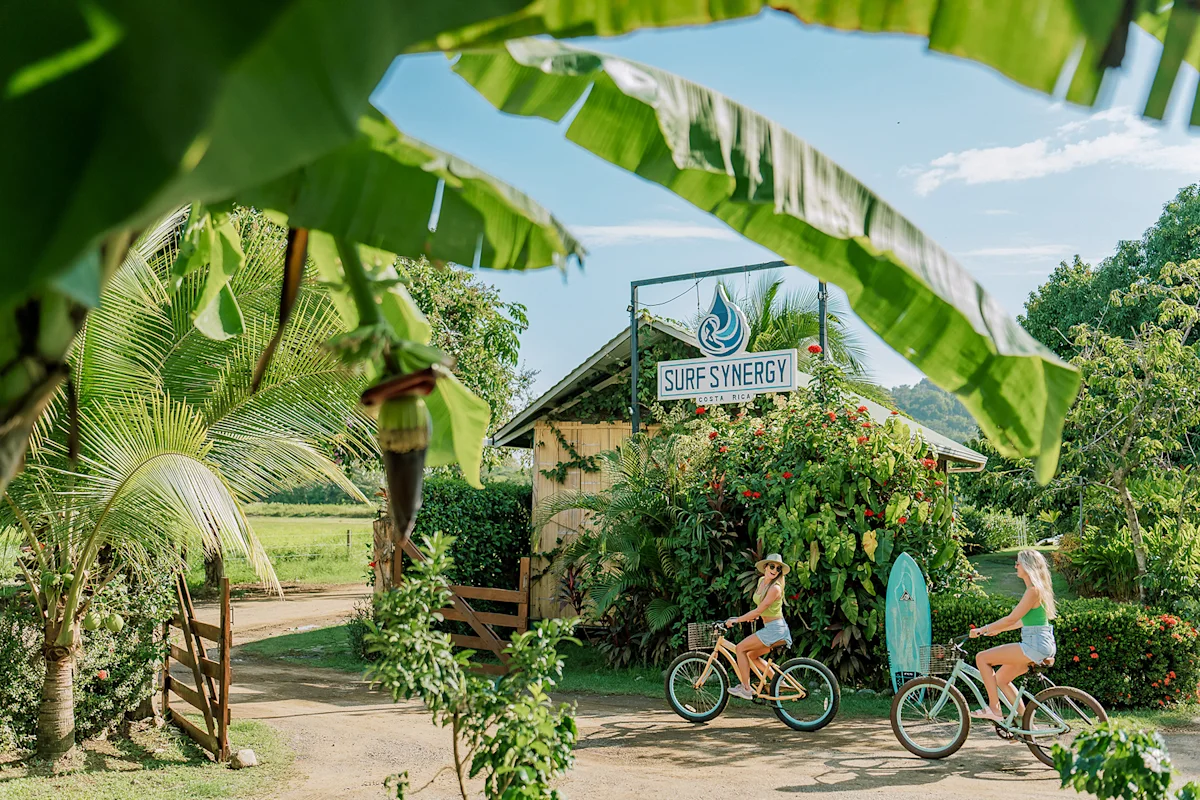
tamara-susa-surf-synergy-entrance

Photo by Tamara Susa

Enrolling in Surf School at Midlife

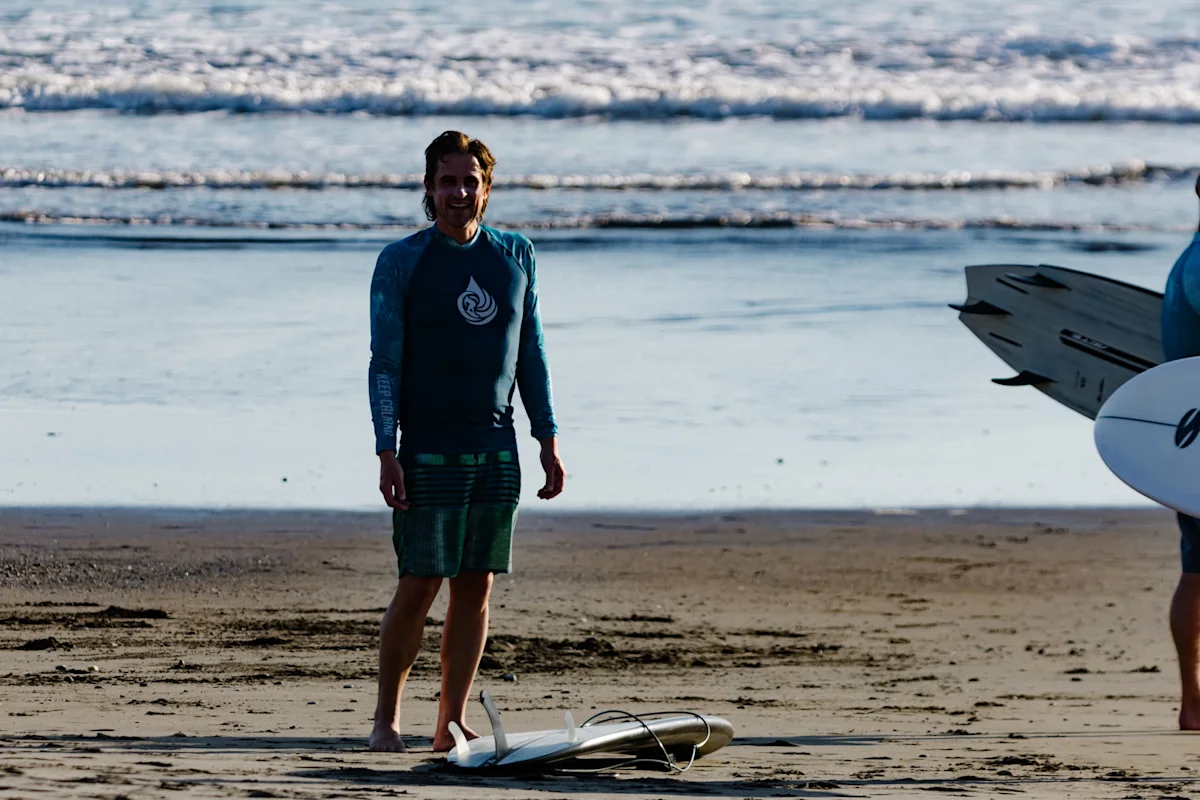
Four months into this obsession, an opportunity to answer the question appeared when I was invited to try Surf Synergy’s Power Surf program in Costa Rica. Power Surf is a structured surf coaching method built on four core pillars: physical, technical, tactical, and psychological performance. Developed by founder Rodrigo Machado, who has a background in sports science and high-performance training, the system translates the biomechanics of surfing into repeatable movements that can be practiced on land before applying them in the water. It uses tools like surfskates, video analysis, and deliberate movement training to help surfers break ingrained habits and build new patterns, with a strong emphasis on mental awareness and habit change alongside physical technique.

I grew up 10 miles from the beach and surfed just about every day after I got my license and could drive myself there. It's the first sport I went all-in on and devoted my life to. I'll save you (for now) the laundry list of trips, tricks, and wave sizes I conquered (differentiated by “on the face” or “on the back” depending on how obnoxious I was being), and say that surfing was something I always did and something I barely do, anymore at least.

I answered the invite, saying that I would love to come and become a better surfer, but not before writing the most embarrassing humble-brag about the surfer I was 20 years ago. I couldn’t even answer an email without failing to see the opportunity to show some humility.

When I sat down for the breakdown of my Power Surf program at 8:00 PM on the first night of the trip, I was nuked. I'd flown to Costa Rica the day before on a red-eye flight that my daughter slept through and had spent the day trying to keep up with her full-energy excitement of experiencing a beautiful new place. I'm a skeptic in a good mood, but the thumping headache I was trying to focus through was turning me into a dick. Rodrigo’s earnestness, thorough love of talking about the movement of surfing, and fluid mastery of the subject made it hard to be a hater—until he introduced a tool we would use to break pre-existing beliefs all of us in the class had about our ability to surf. It was a thick rubber bracelet, like the Livestrong ones of the early aughts, and he told us that whenever a thought that was going to hold us back entered our minds, we should snap the bracelet to center ourselves.

This was the opportunity for critique I'd been looking for. I heard in a podcast once that rubber bands were used in conversion therapy in the '90s, and wrote in my notes, “bands = problematic?” In my head, I drafted funny stories to tell my buddies about the archaic methods I was going to be asked to deploy to improve my mind and my surfing. A part of me understood I was using lazy academic study and humor to build a wall, like I always do. I thought of showing off in the meeting and bringing up the potentially problematic nature of the methodology, but decided to quietly behave myself instead.

surf-synergy-man-surfing

Courtesy Surf Synergy

The Snap Bracelet Mindset Method

The next morning, Rodrigo greeted me at 5:48 AM with a firm handshake, a big smile, and prolonged eye contact while we loaded surfboards onto a van. Maintaining eye contact, he asked me where my bracelet was. Lying through my teeth, I told him my daughter had been playing with it, and I had forgotten it in the room. “It is important, Joe. Don’t worry, I have another.” He ran to retrieve a new band from a nearby building. “Don’t forget,” he said, pantomiming slapping it on my wrist, holding on to his smile.

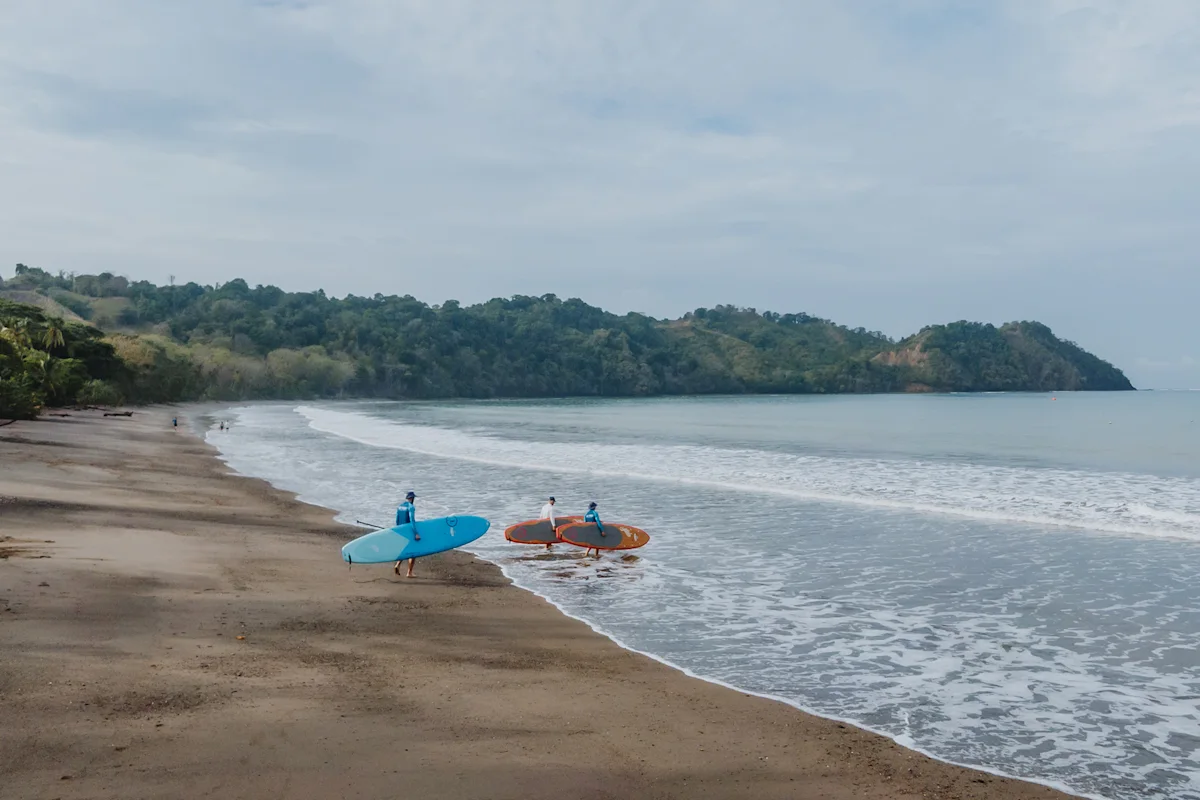
On the ride to Playa Hermosa, I started theoretically comparing myself to the other surfers in the van and felt a familiar self-loathing. The group included an editor from Surfer Magazine, who lives walking distance from waves, three local surf coaches who were here to get certified in Rodrigo’s method, and Rodrigo himself. Soon, they'd all see how much of a fake I was on my first wave.

Enter my mind for a moment:

Everyone is tanner than me. Fitter. Should I tell the story about when I went on a boat trip to the Mentawaiis with a bunch of Hawaiians 20 years ago? No. It will just highlight how much of a fake I am. You have no business being on this trip. I snap the bracelet right as we turn down a dirt road and the waves come into view. The light sting offers a head change. It’s amazing to be in Costa Rica. I am so grateful to be here.

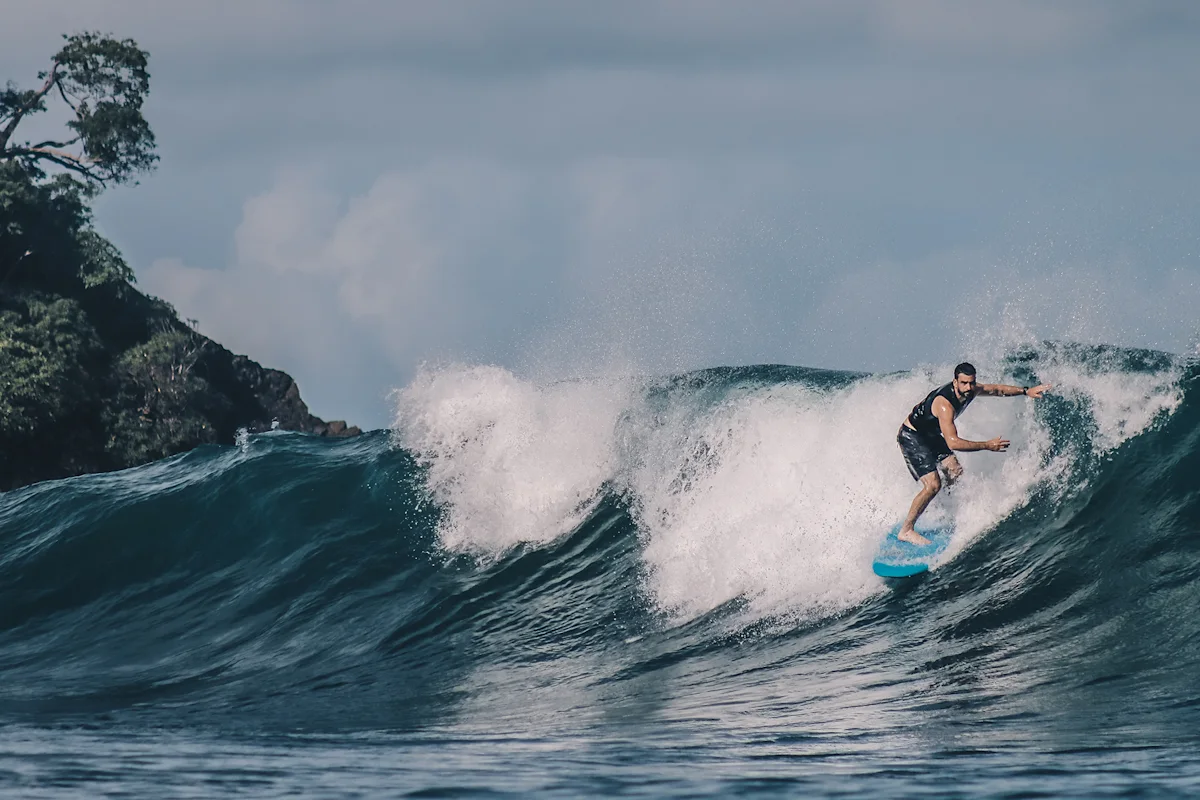
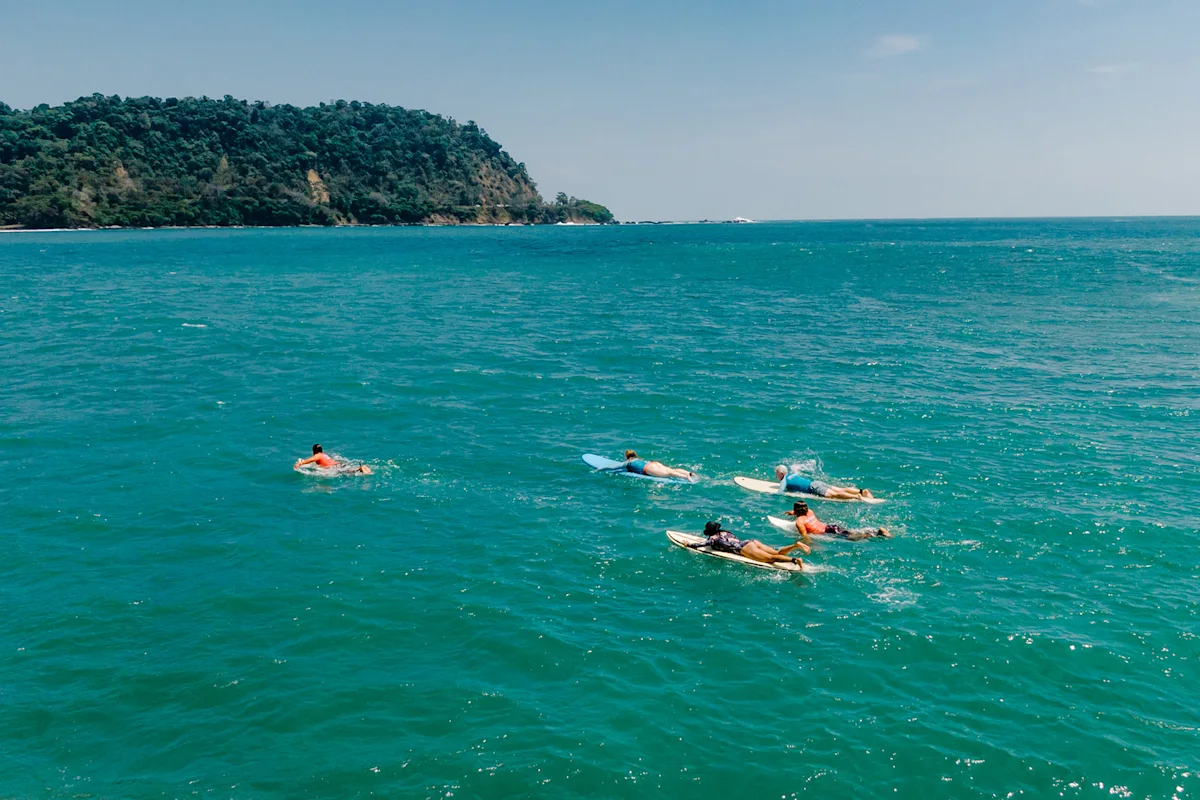
In the water, I missed my first wave. Snap! Then the second. Snap! On the third, I paddled into the best wave I've had in over 15 years. I cried tears of joy and relief into the Pacific as I paddled back out. I did not snap my bracelet for getting so overwhelmed, but I did get my shit together before I got into the lineup to avoid weirding out the rest of the group.

"There's presence on the other side of learning something new, and that's why forcing yourself out of the comfortable rut is valuable."

There were other moments I had to use the snap bracelet.

Like the surf skate sessions in the Jaco Skatepark, where I learned, painstakingly, how to understand the movement of my hips and my lower body as two distinct movements. This facilitated the biggest physical breakthrough in my surfing.

Being timid in the lineup was another. I have always sold my beta-male mindset around surfing as a sign of my largesse. I have felt, in pretty much every crowded surf session in my life, like I was getting in people’s way, so I stayed far away from prime takeoff spots. What I labeled as courtesy was actually a manifestation of the debilitating anxiety that I entered the water to try to escape. After sessions, from behind a big smile, I would talk about how thankful I was that I got a few good waves, or play up how fun it was to try and seem super fucking chill about the fact that I had stayed deeply inside, picking up the scraps of more aggressive, local, or better surfers’ waves.

Rodrigo picked up on my nerves during my fifth session, when I only caught three waves over the course of two and a half hours. He told me that he felt intimidated in the lineup, too, that he doesn’t want to piss off locals or surfers who understand the wave. He also reminded me that I could stick close to them respectfully and take later waves in a set. “Stick to them,” he said. “When you feel scared, snap your brace.”

surf-synergy-jaco-beach-surfers-walk

Courtesy Surf Synergy

Old Dawg, Breaking Habits

I wanted for nothing throughout the week. At Surf Synergy, the Power Surf program is woven into a broader experience that blends surf coaching with recovery and wellness practices designed to accelerate learning. Days are structured around surf sessions paired with video analysis, mobility work, breathwork, and yoga, all aimed at reinforcing the physical and mental components of progression. The philosophy emphasizes recovery through nutrition, rest, and bodywork so that each session builds rather than breaks the body down, while the wellness programming integrates mindfulness and nervous system regulation to help surfers stay present and adaptable in the water. The result is ridiculously rad.

Every hunger pang was met with as much balanced and delicious food as I could eat. Aching joints were met with mobility exercises, yoga, and one of the best massages I have ever had. In spite of the resort bringing the ground up to meet my feet, it was incredibly hard to break through my bad habits. I found myself grumpy, snarky, and sore as shit at times, despite the complete and thorough pampering.

But I did break through. By the tenth session, I was less timid in the lineup. I was using my upper body to help my turns more than I ever did in my youth. I generated speed more efficiently than I ever had while working down the line of a wave on both my front and backside. On the second-to-last wave of the trip, I made the best backside turn of my life. A filmer caught it on video, and I have unembarrassedly watched the footage with glee dozens of times since returning home. In short, I became a better surfer as a 43-year-old Oregonian who lives two hours from the beach.

The more I think about the habits I formed as an outdoor athlete and the direct aversion I've had to breaking them as I age, the more space I'm finding for kindness around all of it. Just because I use these activities to create joy and support my mental health doesn't mean habits won't, or shouldn't, arise from them.

surf-synergy-joe-jackson

The author | Courtesy Surf Synergy

In his fantastic book How to Change Your Mind—don’t worry, I won’t pitch you all on mushrooms or DMT this deep into a story about surfing—Michael Pollan writes one of my favorite cases for why we get into ruts as we age. “Habits are undeniably useful tools, relieving us of the need to run a complex mental operation every time we’re confronted with a new task or situation. Yet they also relieve us of the need to stay awake to the world: to attend, feel, think, and then act in a deliberate manner,” he writes. There's presence on the other side of learning something new, and that's why forcing yourself out of the comfortable rut is valuable. It's what makes enlisting a teacher to pressure you to learn something new about a sport you have thousands of reps in worthwhile.

I want to finish this article with an anecdote about how I used my snap bracelet to get me through writer’s block or to become braver in my everyday life. That would be a lie, though. My daughter did lose the bracelet (for real this time, swear!), and I haven't put serious work into breaking through other limiting beliefs in my life. But I do have the memories of those turns and a different narrative about the surfer I am and will continue to be. I plan to spend the month of August progressing as a surfer and will continue to use what Rodrigo taught me until my shoulders fall off and I have to retire from the lineup, leather-faced, to a towel on the beach.

So go get a lesson, dammit. It doesn’t matter how good you are, or how humble you are about not being good. It will likely make your experience of the sport you love deeper and more enriching. The price is worth it, and the only other cost is being brave enough to say you have room to learn.

Inspired to dip your toe into surfing? We've got you: check out our guide to surfing in NYC, plus some gear recs for surfboards, board shorts, and women's swimsuits