How UTMB Became a Chaotic Spectacle and the Race Women Runners Deserve

How UTMB Became a Chaotic Spectacle and the Race Women Runners Deserve

Author Photographer
  • Micah Ling, Contributors, UTMB

This year's UTMB inspired conflict and debate about sustainability, but what if its beneficial impact on women's trail running is more important?

Published: 10-14-2026

A visitor's first view of Chamonix makes the town, situated at the bottom of a tight valley in the Alps at the foot of Mont Blanc, seem impossibly perfect. Classic alpine architecture, a backdrop of meadows and glaciers, epic trails visible from the town square. It all feels fictional. It's the kind of place that tempts you to give up your life back home to figure out how to make it all work here.

But when I arrived in the valley for the first time this past August, my first thought was, Why am I here? To write an article about the Ultra-Trail du Mont-Blanc (UTMB), the 106-mile trail running race that coincided with my visit, sure. To test shoes and join other media in recording the spectacle. But what about me, specifically: What set of circumstances led to this?

eric-greene-chamonix-ski-patrol-vertical-approach

Chamonix from above | Photo by Eric Greene

UTMB was created in 2003 by Catherine and Michel Poletti as a single 170-kilometer loop around the Mont Blanc Massif, through France, Italy, and Switzerland. But the trails it's held on are ancient. Celtic and Gallic tribes utilized them, and later local shepherds moved their livestock through high mountain passes on them, soldiers marched on them, and now hikers all over consider the Tour du Mont Blanc to be one of the world's bucket list backpacking trips. So many lives, so many steps, so many people looping these giant mountains.

UTMB has become the premier trail running event in the world. During race week, Chamonix and the nearby towns swell with runners and race spectators. The event turns everyone into a runner—it’s infectious; you get here, and you suddenly want to know everything about the event. In the event's first year, just over 700 people toed the start line and only 67 finished. Of those 67, seven women made the full loop, including the first American winner, Kristin (Krissy) Moehl, who finished 24th overall in 29 hours 38 minutes and 24 seconds.

Dropping into the spectacle of what UTMB has become today, with more than 2,000 runners in the main event—not to mention a series of other trail races that occur throughout the week—brand activations, product drops, nightly parties, and all the rest, this history felt important. With so few women participating, Moehl's triumph felt like more than a race win; it felt like the first brick in the foundation of something colossal. But I had to see what UTMB was all about firsthand to understand what's been built on top.
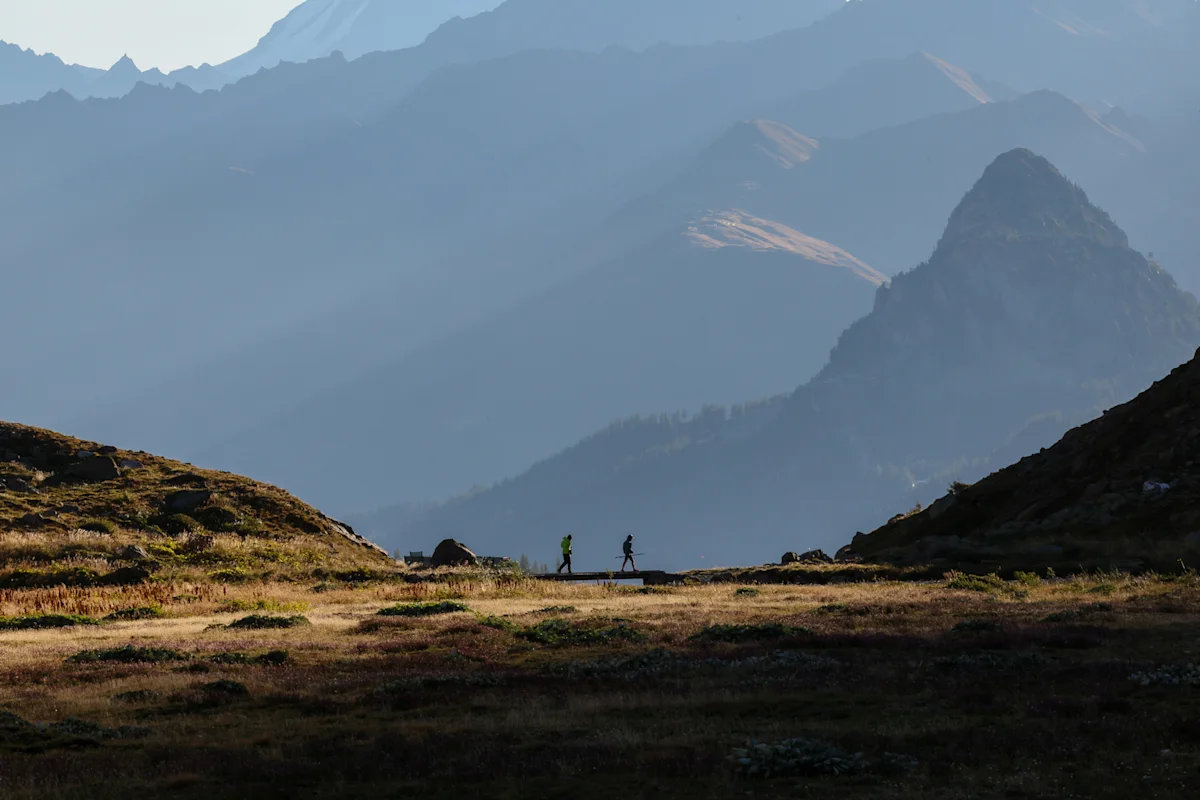
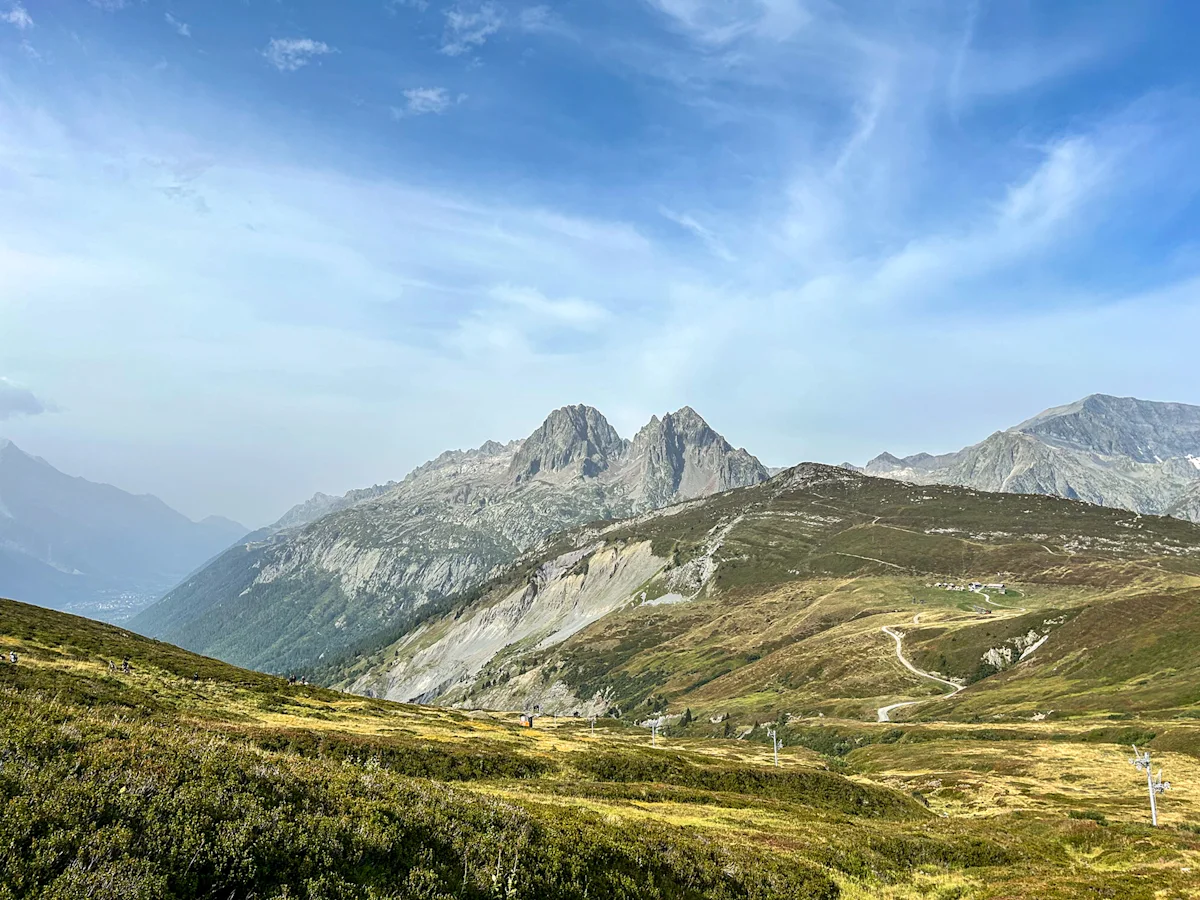
utmb26-landscape

Views along the UTMB course | Courtesy UTMB

The Evolving Culture of Women’s Running

I don’t remember ever being called a “tomboy” when I was younger, but that was the era I grew up in. As a kid of the '90s, I can distinctly remember wishing more girls wanted to run fast and play kickball at recess instead of sitting around doing quiet things like coloring, reading, and braiding each other’s hair. But I didn’t want to be like the boys; I wanted girls to be like me.

I went to minor league baseball games and basketball games at Ohio State with my brother and my dad, and I always wondered why we didn’t go to see girls play. Professional women’s sports basically didn’t exist then, so I never saw strong women competing in serious venues. But I wanted to compete. I was the kind of kid who desperately looked forward to field day—when the whole school would take part in track events—so I could rack up as many blue ribbons as possible.

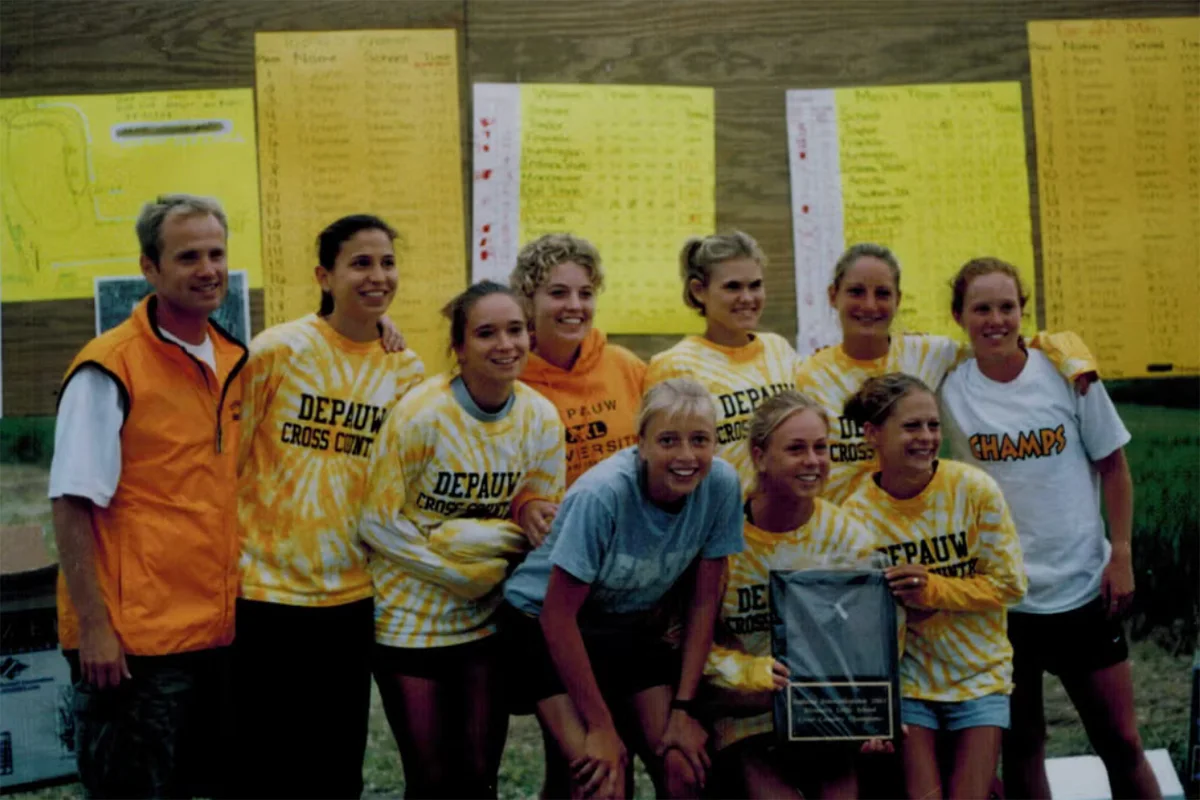
In college, I ran varsity cross-country, but it wasn’t the community of strong women that I expected and needed. The sport was riddled with disordered eating, and obvious issues related to women's participation went unacknowledged. There were no open discussions about nutrition, fueling, or relative energy deficiency in sport. I wanted to be as strong and excited about going fast and doing big things as I was as a child, but I didn’t have the tools or the idols to look up to. On the bus to away meets, we would watch movies about Steve Prefontaine. I don’t think I knew the name of a single elite woman runner.

micah-ling-depauw-cross-country-team-group-photo

The author and the DePauw cross-country team | Courtesy Micah Ling

But I never let go of my own personal running dreams and projects. I’ve always been one to set goals and then methodically chip away at them. Climbing a mountain, climbing a mountain faster, climbing a mountain the fastest. Qualifying for the Boston Marathon, chasing PRs, running 2,000-plus miles in a single year. I can put my whole self into an arbitrary carrot, just for the sake of the chase. Just for the sake of working toward better.

Luckily, women’s trail running today is full of joy, bravery, and emotion, and it’s been taking shape for a long time. Athletes like Krissy Moehl and Lizzy Hawker, who won UTMB in 2005, 2008, 2010, 2011, and 2012, the most of any athlete, male or female, and others who came before have helped today’s runners do great things. Women are getting more and more comfortable owning the sport—they’re no longer mimicking the men or asking permission to be here. Women have fully made this sport their own, and now they idolize each other.

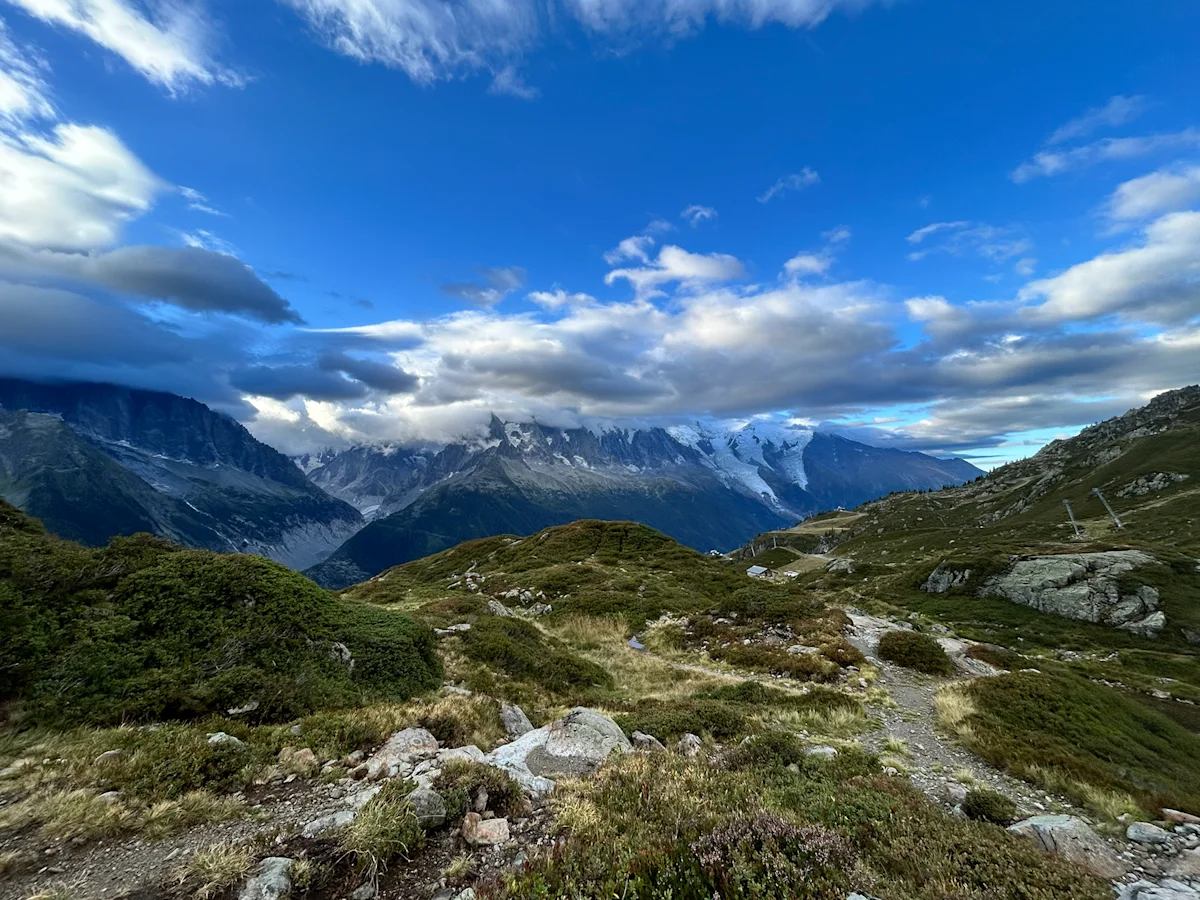
micah-ling-CDB2-mountain-landscape

A typical Chamonix view | Photo by Micah Ling

Race Day in Chamonix

Just before 5 PM, I board a tour bus in downtown Chamonix and head for Notre Dame de la Gorge, a little over an hour away. The media team has taken over Biche in Les Contamines-Montjoie, a restaurant situated right at kilometer 35 of the UTMB course. From the moment we step off the bus after driving up a long, winding road into the evening's fog, it's bumping. Electronic music pulses with a heavy beat and there's every kind of drink you can imagine, from made-to-order cocktails to espresso. There are platters of colorful hors d'oeuvres with foams and dips, all perfectly plated. And then there are headlamps and bells on every table. The rain is clearing and the sun is setting. A little before 8 PM, we gather in a field near the venue to watch on a jumbotron as the runners, back in Chamonix, set off. They’ll be coming through exactly where we’re standing in about three hours.

We pass that time with more food, drinks, and loud music. The patio and field are full of elite trail runners like Francesco Puppi and Ryan Montgomery, CEOs, business execs, influencers, and media folks like myself. If the race weren’t going on, a passerby might mistake this for some sort of swanky outdoor rave. It's the kind of scene that only seems possible as a spectacle at an endurance sport event in Europe. The whole thing is on par with the party atmosphere you see at the Tour de France, ahead of the peloton coming through some famous mountain pass (less face paint, more high-end fashion). All of it made the question that'd been in my head all week ring even louder: Why am I here?

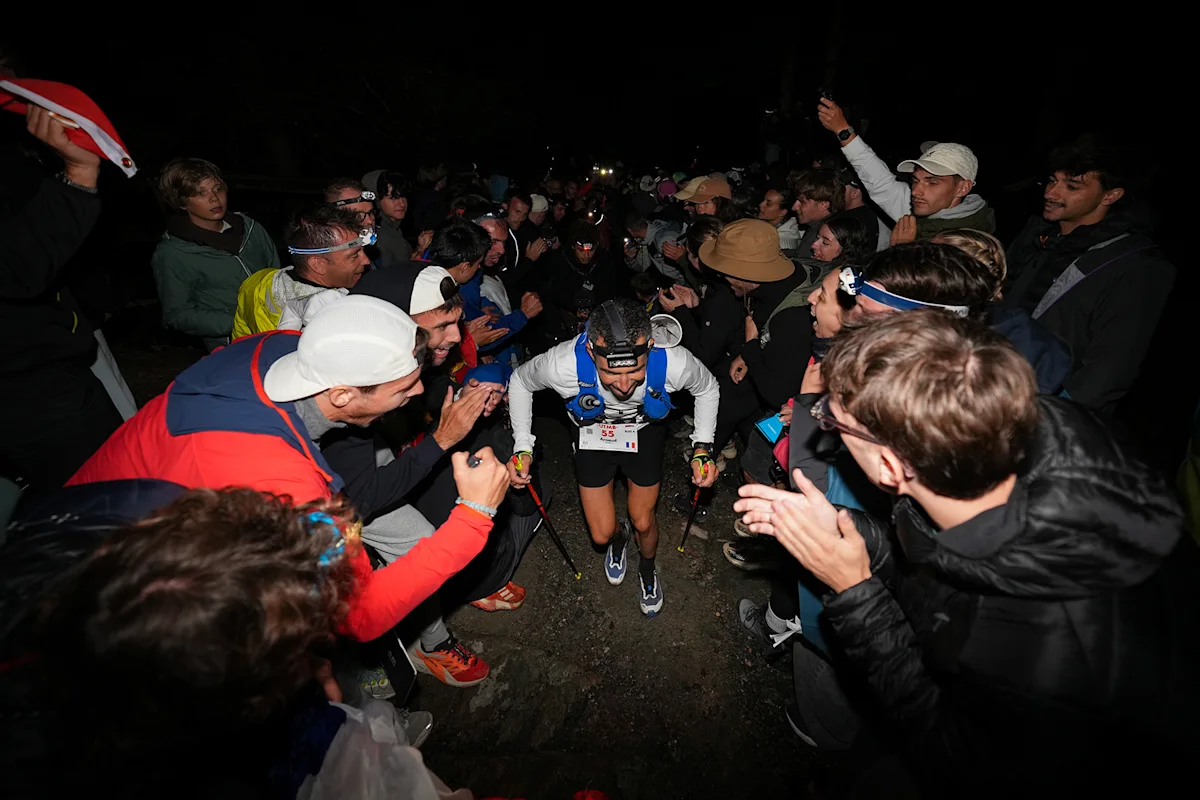
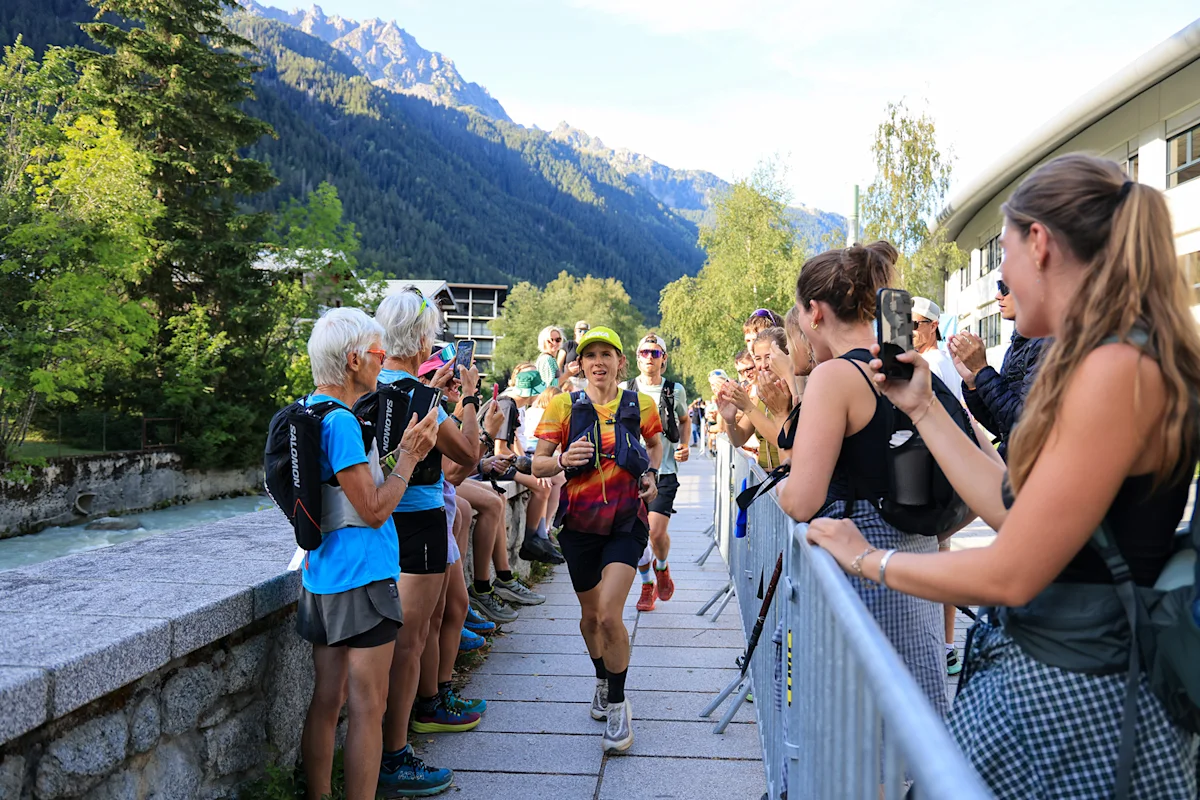
The night is crisp, maybe 50 degrees. The moon is nearly full, and as 11 PM approaches, so do the runners. Race spectators fill the field; so many people. All ages, all excited to get a glimpse of their heroes. The expectation of the moment thickens the air and, finally, headlamps bounce up towards us. There's one, and then another, a few at a time.

utmb-2026-racer-amid-crowd

Courtesy UTMB

The first woman to pass is Lucy Bartholomew, who has had a top-ten finish at UTMB three years in a row, with a huge grin. Then Rachel Entrekin, the overall Cocodona 250 winner and a fan-favorite. Courtney Dewaulter, the three-time UTMB winner and overall trail and ultra GOAT, is several places back, but she gets a notable ovation as she passes.

I jog down the trail away from the venue, just to see how far I have to go until I can't hear the music or the bells. It's a full mile. As I return to the noise, it’s like happening upon a secret circus in the woods. There are parents with kids on scooters, so excited there’s no way they’ll sleep tonight.

Sometimes when I spectate a race, I experience a deep wish to be the one out there doing the thing. But not here. Cheering for others at UTMB is like getting a front row seat at the World Cup, a Broadway show, or a live performance by your favorite band. Just to bear witness is a true thing of beauty.

After all of the lead runners are through Notre Dame de la Gorge, I hop back on the bus to get another glimpse of them a few miles down, and then we head back to Chamonix. It’s after 2 AM when I trudge through my hotel lobby, but after such a buzz of excitement, I don't expect to sleep much.

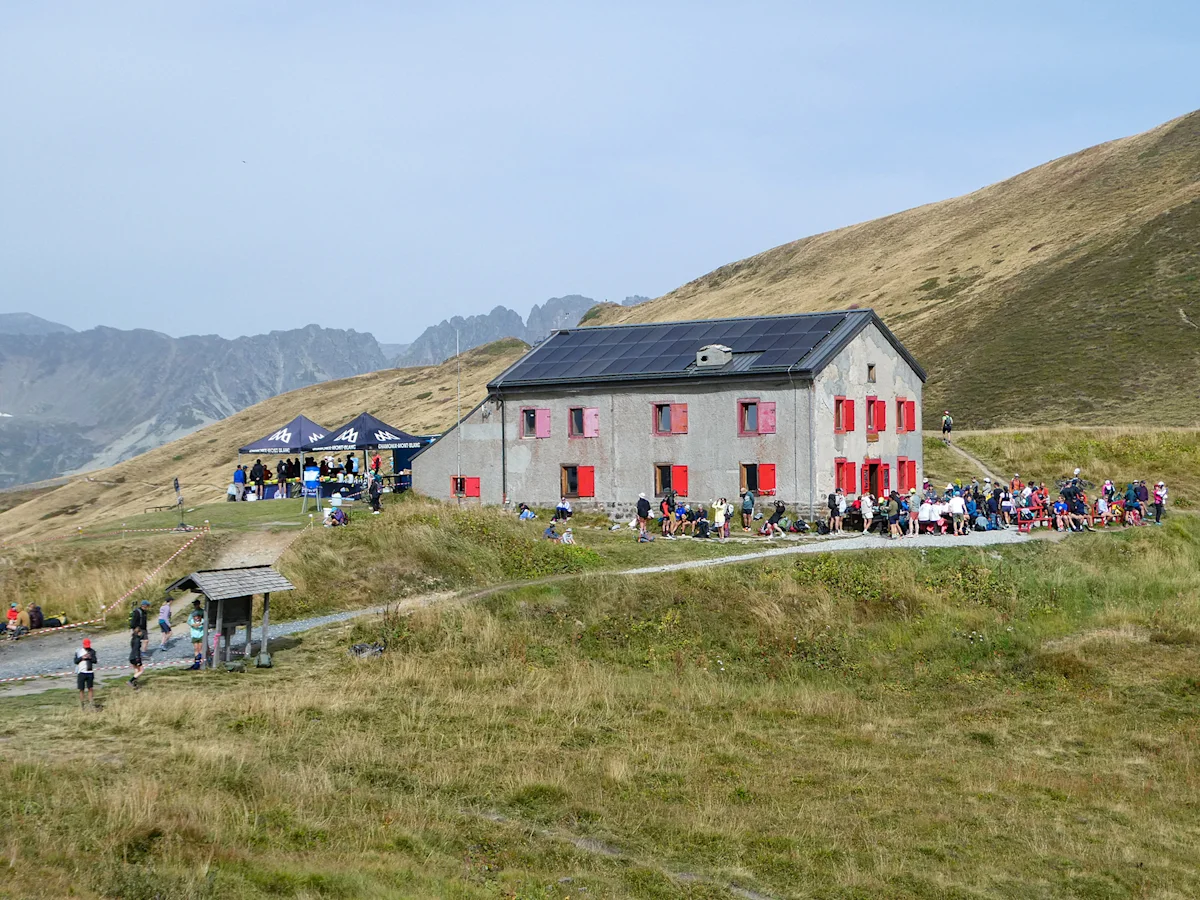
micah-ling-col-de-balme-house-stoppoint

Refuge du Col de Balme | Photo by Micah Ling

Completing the Loop

My alarm goes off at 6 AM. I throw on my running shorts and light jacket, grab my hydration vest, and head up to La Flégère, the final major mountain checkpoint on the UTMB course and the gateway to the last thrilling downhill stretch into Chamonix. It’s common for fans and locals to head up the mountain on this route because you gain a lot of elevation in a short distance. On my way, I learn that Courtney Dauwalter dropped out of the race in the wee hours of the night, and French runner Blandine L'Hirondel is in the lead. Rachel Entrekin, Emily Schmitz, and Careth Arnold are all in the mix for the podium.

La Flégère is the final aid station on the course, just seven kilometers before the finish. I'm here early, and the runners won’t be here for another few hours, but I want to get a feeling for the atmosphere. The steep gravel road I hike up turns into a trail, and it gives me a huge appreciation for the immense amount of climbing and descending on this course. There’s no such thing as coasting out here.

This section of the trail goes through Chalet de La Floria, a mountainside cafe known for a vibrant, flower-filled terrace overlooking the valley. By "goes through," I mean you walk right across the terrace to continue onto the trail up the mountain. It's still quiet now, but by the time the runners get here, this place will be bonkers with fans.

micah-ling-flegere-landscape-view

Photo by Micah Ling

At the top, I reach the La Flégère gondola, and yet another party. People are camping, prepping baguette sandwiches, making coffee, and unwrapping pastries purchased down in town. There’s fog and sun and big mountain views and somehow it doesn't contrast with the atmosphere, which is some combination of music festival, campground, and sports venue.

Traipsing around the refuge, I hear at least four different languages. Everyone is smiling, happy, and refreshing the UTMB live app, tracking the leaders or loved ones who are competing. Over the course of the week, I've come to understand that we all recognize this is a spectacle; deep down, everyone is aware that this isn’t actually the most important thing happening in the world. There are conflicts and traumas and disasters, both minor and inconprehensibly vast, that'll return to occupy our minds once this is over. But this also feels important, and needed—an escape where running across gorgeous mountain trails feels crucial.

It's when I continue up the trail to Lac Blanc that I start to feel like I’m in the right place. I feel strong and want to keep exploring around the next bend, to see what's up at higher elevations. But I return to La Flégère and ride the gondola down to town. The runners will be arriving at the finish line soon, and I want to be there when they do.

tanner-bowden-chamonix-hoka-fan-face

The scene at La Flégère | Photo by Tanner Bowden

At the Finish Line

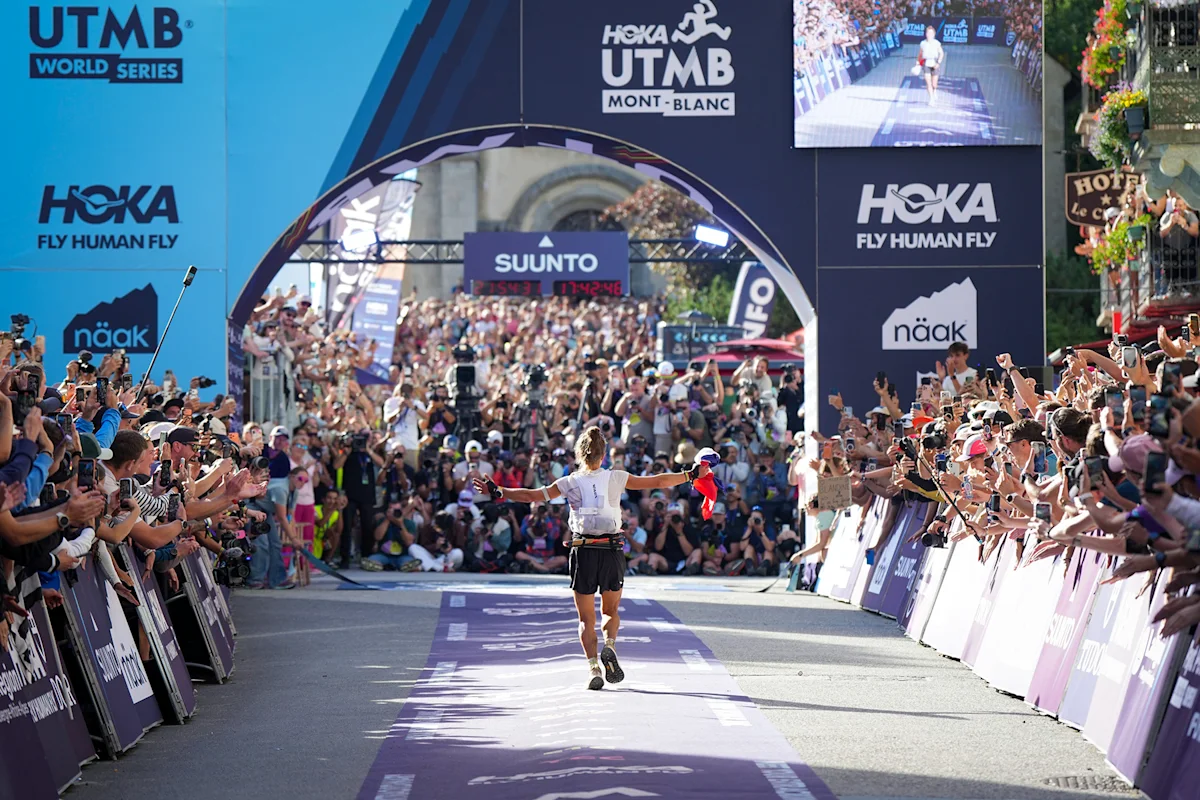
Thanks to a wide-ranging team of talented mobile camera operators on foot and on e-bikes, it’s possible to watch most of UTMB live. Back in Chamonix, the feed is being broadcast on a jumbotron set up right at the finish line. When I arrive, the lead women are 45 minutes out, and the excitement is building. The main square in front of Saint-Michel Church is packed to the walls, and cameras and cowbells are everywhere. People are hanging out of hotel windows, and spectators are crammed onto every overlooking balcony. I have a spot on a platform four feet above the road, with ideal views of the final corner and the finish line, but I have to stand my ground not to get pushed to the back.

On the jumbotron, we watch Blandine cement her lead—she's still roughly three kilometers out, flowing down the trail I'd hiked up earlier—and then she trips on a rock and falls, hard. Thousands of people around me gasp and then go silent. It’s like watching a horror film. The crowd audibly wills her to get up, and then she does. She takes a few pained steps and we all wince. Then she starts back into a slow jog, and everyone goes wild. That's when it hits me: this is why I’m here. There are thousands of fans—men, women, all ages—and we’re here for the women.

utmb-2026-emily-schmitz-running

Emily Schmitz nears the finish | Courtesy UTMB

Not long after, I hear a low roar down the road indicating that the action has moved off the jumbotron and is heading right for us. Blandine jogs around the final curve, sees the finish line, and is overcome with emotion. She’s crying; everyone is crying. She completes those final steps, pulls the French flag around her shoulders, and plucks the finish line tape up to hold over her head. The noise is all-consuming. Blandine might as well have been off at battle. We chant “BLAN-DINE, BLAN-DINE, BLAN-DINE!”

I have the answer to the question I'd been asking myself all week. I need to be here. Because until now, I have never in my life witnessed this kind of wild celebration for any woman.

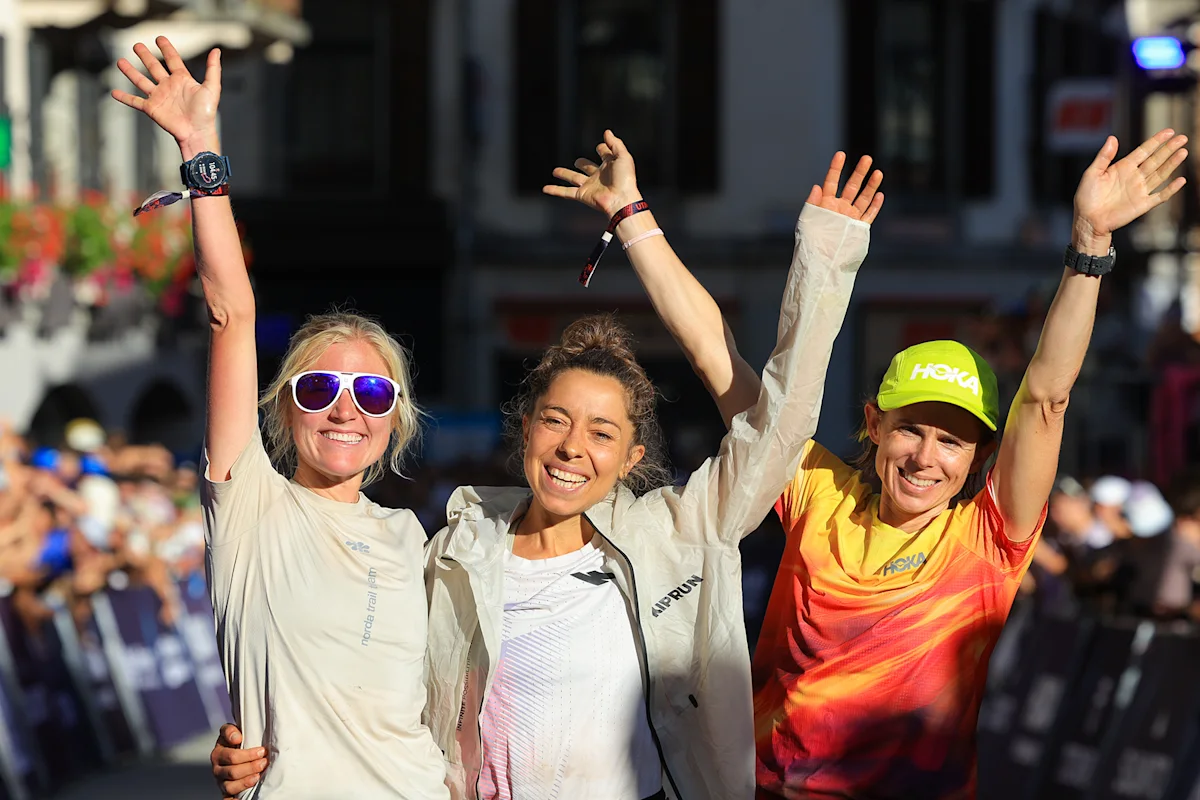
Rachel Entrekin rounds the corner and the crowd goes nuts all over again. What feels like mere seconds later, it's Emily Schmitz. Beyond the cheers from the crowd, the women also cheer for each other. They embrace, they high-five, they take bows. Blandine made the loop in a time of 21:54:49; the first woman to ever go under 22 hours.

utmb-2026-blandine-finish-line

Blandine L'Hirondel at the finish line | Courtesy UTMB

The Spectacle We Need

Most of trail running is nothing like UTMB (thank god). There’s rarely music thumping so loud you can hear it from a mile away; there’s almost never a live feed, or thousands of screaming fans, or “Conquest of Paradise” by Vangelis playing at the finish line.

This year, more than any other, the discussion around UTMB has been about the sustainability of the event and its future. Glaciers are melting, the mayor wants a smaller environmental footprint, and locals are sick of the hype and the 100,000 people who cram into the valley during race week. But for the little kids seeing Blandine, and Rachel, and Emily, and for those of us who never got to see people cheering like this for women, this is a spectacle we need.

The women who compete at UTMB are much-needed proof that you can wear what you want, train how you want, embrace fashion, apply glitter, do your nails, get bloody, crack jokes, sob your eyes out, and get to the finish line in a time that was never thought possible. The next steps need to involve knocking the doors down for Black and Brown women. The conversation about UTMB—and trail running as a whole—should absolutely take into account the environmental and social impact that any event has. But it also needs to consider those who have traditionally been left out of the sport.

utmb-2026-women-top-three-group-shot

Rachel Entrekin, Blandine L'Hirondel, & Emily Schmitz | Courtesy UTMB

Women don’t have anything to prove in running or in any other sport. We’re here, we belong, we take up space, we make it better. But there’s still plenty of work to do when it comes to representation, diversity, and parity. UTMB isn’t what the rest of the trail running world should aspire to, but it does put on a hell of a show. It reminds brands and sponsors and fans that this is worth investing in—and people are absolutely here for the women’s race.

I was too. I was here for little me, college me, and present-day me: always working on my own next goal. I’ll never forget the absolute roar of the crowd—and just how much every version of me needed to be here.

More from UTMB: inside the mind of Vincent Bouillard, a Hoka shoe engineer who became a trail running phenom.