A Hiker's Guide to the Katsuo Trail, A New Long-Distance Route in Japan

A Hiker's Guide to the Katsuo Trail, A New Long-Distance Route in Japan

Author
  • Jeff Thrope
Photographer
  • Colleen Hammond

Camera
  • Nikon L35AF
From sea to summit, a new 130-mile hiking loop in Japan links the fishing culture of the coast to the rugged ridgelines of the country’s Southern Alps

Published: 06-16-2026

Katsuo Trail Stats

Total Distance: 210 kilometers / 130 miles
Total Elevation Gain: 6,300 meters / 20,669 feet
Average Completion Time: 9 days
Recommended Direction: Counter-clockwise loop starting from Yaizu
Map & GPX: Here


In Japan, katsuo, the Japanese name for skipjack tuna, is most commonly encountered dried and shaved. Katsuobushi, or bonito flakes, are paper-thin fish shavings that “dance” when they’re served on hot dishes like takoyaki or okonomiyaki, and they're a fundamental ingredient in Japanese cooking.

Now, katsuo is also the name of a new long-distance hiking trail that begins on the coast southwest of Tokyo in Yaizu, a city renowned for its large catches of bonito, which have played a major role in shaping the region's history and culture. Opened in spring 2025, the Katsuo Trail is a 130-mile route that loops from the sea up into the Southern Japanese Alps and back again.

The newest Japanese may span just 20% the length of the 1,000 km-long Michinoku Coastal Trail, which stretches along the Northeastern shore of Honshu, but the culture and terrain it packs into it's relatively short distance is well deserving of a proper guide.

colleen-hammond-katsuo-trail-guide-red-bridge-blossoms

Katsuo Trail Origins & Character

Yaizu, located in Shizuoka Prefecture, is an easy 1.5-hour train ride from Tokyo. It is also the part-time home of Lucas B.B. and Kaori Berkow, the married couple behind the long-running Japanese travel and lifestyle magazine Papersky. Kaori, the “captain” of Papersky, grew up in Yaizu, and over the last few years, the pair have spent a significant amount of time hiking in the area while fixing up a family house. The experience fostered a desire to highlight the region’s history, culture, and outdoor treasures by creating a community-led long-distance trail, so Lucas formed a non-profit, DO-Labs, to piece together the route that would become the Katsuo Trail.

In April 2026, I traveled with my wife Colleen—who took the A+ 35mm photos for this article—to Yaizu to be among the first to hike the loop, with Lucas and Kaori as our guides. DO-Labs has the trail mapped out as a nine-day hike—approximately 14 miles a day—with a healthy dose of elevation on some of the days. Like other Japanese long hikes that I’ve done in the past, the ascents tend to avoid switchbacks in favor of going straight up (up! up! up!) the side of a mountain.

katsuo-trail-map

To balance the rigorous elevation gains, each day ends with either an onsen or a hot bath, famed Japanese hospitality, stunning views, and, of course, fantastic food. If you’re lucky, an O bāchan (grandma) will send you along on your next day with homemade ume plum onigiri to eat for lunch as you’re hiking through the mountains.

The Katsuo Trail can also be done as a biking route, which is significantly shorter as it’s all on roads. In this guide, I’ll cover the hiking route.

Pdfs maps of the Katsuo Trail and its daily sections, along with GPX files for download to import into various mapping apps are readily available.

colleen-hammond-katsuo-trail-guide-tunnel

Walking through the Meiji Utsunoya Tunnel

colleen-hammond-katsuo-trail-guide-crowded-table

A typical meal at a local inn

Trail Learning

The Katsuo trail is based on the concept of “trail learning,” which Lucas describes as “the hidden potential for discovery and growth within the simple act of walking.” The idea is that we can gain vast insights into a culture and into ourselves through an everyday, unassuming act: one foot in front of the other. On the Katsuo Trail, this means a great combo of walking through woods, over bridges, and along country roads that wind through rural Japanese towns that hug the Oi River, known locally as the Oigawa.

Food on the Katsuo Trail

Dinner and breakfast are served at every inn you stay at throughout the trip, which is incredibly convenient and delicious after and before a long day of hiking. That means the only dinner we cooked ourselves was at a camping area, but even then, the food and the cooking utensils were provided for us; all we had to do was heat it up. The traditional meals are prepared by the owners of the inns, and they typically include a lot of fish, fresh mountain vegetable tempura in the spring, and, of course, a lot of rice. You can buy Japanese beer at every stop, so every night felt like a special celebration, a unique way of experiencing a long-distance trail.

Composition and Highlights of the Katsuo Trail

The Katsuo Trail starts on the ocean at Ishizuhama Coastal Park in Yaizu, with front-row views of Mt. Fuji, cloud cover permitting. A few hundred yards away is the future Bonito Building, a coffee shop and Papersky Inn that will serve as a Visitor Center for the Katsuo Trail and will be stocked with poetry and walking books in English and Japanese. After buying a fish-motif amulet at the Nahei Shrine to protect you on your journey, you’ll be ready to go.

Below, I'll break down some of the Katsuo Trail's highlights. Let the trail learning begin.

colleen-hammond-katsuo-trail-guide-building-interior-signage

Inside Ieyama Station

Day 1: A Famous Zen Temple & Craft Hotel

Day one takes walkers to the summit of Mt. Takakusa, but before you get there, make sure to stop at Rinso-in, the Zen temple where Master Shunryu Suzuki served as abbot for a significant portion of his life before moving to the United States in the late 1950s. Suzuki founded Tassajara, the first Zen Buddhist temple in the United States, and the San Francisco Zen Center. You’ve probably seen or read Zen Mind, Beginner's Mind, one of the most popular books ever written about Zen and Buddhism in the West. (I highly recommend the audiobook version, read by Peter Coyote.)

On our trek, we were able to join Suzuki's grandson, who runs the temple these days, in a morning meditation and tea while it was pouring rain outside, a truly magical way to start a nine-day trek.

Day one ends in Shizuoka City with a stay at the incredible Izumigaya Craft Inn Waraku, a hotel/spa that specializes in local—you guessed it—master crafts like bamboo lattice work, tea-dying, pottery, and stool building. You can take classes, eat at the on-site restaurant Simples, which utilizes the area’s local seafood, and soak in a luxurious onsen.

colleen-hammond-katsuo-trail-guide-rainy-day-vert

Lucas B.B. and Kaori Berkow on a street in Okabe Juko

colleen-hammond-katsuo-trail-guide-trail-signs-vert

A way marker on the way up Mt. Takakusa, near Rinso-in

Day 2: Edo Roads & Yakisoba

The second day starts with a walk through the serene Okabe-juko, an inn town on the Tōkaidō road, which was the most important trading route connecting Kyoto to Tokyo during the Edo Period. The rest of the day follows the Asahina River through small, quiet towns before reaching the Chakkiri bridge, a small pedestrian crossing that puts you back into the woods to reach the mountain peaks overlooking the river valley.

If you’re following the route as laid out by Lucas, day two ends in a small cottage rental at Okubo Camp. This area seems to attract people who go grass skiing, but we were tired from walking and ready to relax. The owners of the camp will set up a bountiful yakisoba meal for you to cook yourself on a (pre-heated!) outdoor grill with a couple of cold Japanese beers from the front refrigerator. Comfort food at its extreme best.

colleen-hammond-katsuo-trail-guide-miyama-tea-farm

Tea time at Miyama Tea Farm

Day 3: Tea Deck Tasting & Snow Monkeys

On the third day, you’ll stay in Sasama, Kawane, in central Shizuoka Prefecture. Here you can arrange a tea tasting with Miyama Tea Farm, a family-run operation that's been going for over 130 years. You’ll sit with Okumura-san on an elevated platform in the middle of the family’s tea fields—Shizuoka grows about 40% of Japan’s tea—and learn about cultivating and producing while trying complex black teas and sencha. Surrounded by steep mountains, there's plenty of views to take in, too.

The day’s route goes along a section of the Sasama River that’s known to be frequented by Japanese macaques, aka the famous snow monkeys, so keep an eye out for them running along the rock cliffs while you walk.

colleen-hammond-katsuo-trail-guide-mt-musoren

Hiking up Mt. Musoren

colleen-hammond-katsuo-trail-guide-hammock-vert

Day 4: Summits, Vinyl, & a Farmhouse Stay

The fourth section of the Katsuo Trail is the most demanding and hardest to navigate. It starts with a long, steep climb through a dense and aromatic cedar forest on a thin strip of navigable trail that drops off into the woods in both directions. It’s not always obvious where the trail goes, so keep an eye out for ribbons tied around trees to find your way.

After summiting Mt. Musoren (4,472 ft) and Mt. Honjo (4,236 ft), you’ll descend on a rocky trail that leads into an old forest road into Kawane-honmachi, a charming little town centered around forestry that's nestled at the southern edge of Japan’s Alps. If you happen to be there on Thursday, Friday, or Saturday, you’ll have to stop into the heaven-sent Stories, a middle-of-nowhere cafe and bookshop that sells fresh-baked breads, sweets, beers, English books, vintage clothes, and records. Nothing fits better in a backpack than vinyl!

colleen-hammond-katsuo-trail-guide-mountain-range

One of the highlights of our entire trip was staying at Asai, a gorgeous 280-year-old farmhouse in Kawane run by the lovely husband and wife duo, Miya-san and Miki-san. The house is small and is only meant for one group of 2-6 people, so we all shared the sleeping space and congregated in the dining room, which is heated with a wood stove stuffed with cedar clippings from a nearby Japanese tea box manufacturer. Keep an eye out for the drying cedar slabs, which are stacked outside of the factory as you approach the property.

Miya-san and Miki-san cook outstanding vegan food featuring local vegetables and have a traditional private goemon, a Japanese bathtub consisting of a cast-iron cauldron heated with burning cedar, waiting for you upon arrival.

colleen-hammond-katsuo-trail-guide-oku-oi-kojo-train-station

Sweeping views from Oku-Oi Kojo Station

Day 5: Oku-Oi Kojo Station

The fifth day begins with a mildly steep four-mile hike up to the 4,481-foot-high Mt. Tenguishi. After stopping on the summit to devour the delicious sorghum and adzuki bean “meatballs” that Miya and Miki made for you, you’ll slowly descend upon the Oku-Oi Kojo train station, which sits perched on a cliff overlooking the deep blue waters of Lake Sesso, formed by the Nagashima Dam's presence in the Oigawa. You can walk up a trail that brings you to an observation point to watch the trains pass over the Okuoi Rainbow Bridge like you’re in a real-life Miyazaki film.

After seeing the train depart, you’ll walk up the road along a mountainous stretch of the Oigawa where old bridges dot the far side of the cherry-blossom-covered hills. We stayed at the Tabu House, a Tudor-style inn in the village of Sessokyo Onsen with hot baths to steam in a minute down the road. Your hosts there will cook you a traditional Japanese dinner of perfectly grilled fish caught in the river below and tororo, a silky, raw, grated yam dish that is typically served over rice. Tororo might not be for everyone—like natto, it’s got a slimy thing going on—but this author absolutely loved it with a healthy dollop of soy.

colleen-hammond-katsuo-trail-guide-shiogo-suspension-bridge

Crossing the Shiogo Suspension Bridge

Day 6: Small-Batch Backpacks & Suspension Bridges

If you stayed in Sessokyo Onsen, you'll start the sixth day with a train ride from Sessokyō-Onsen Station to Senzu Station, back in the village of Senzu, which you walked through at the end of Day 4. Back on the trail, you'll encounter a flat 14-mile road walk along the Oigawa that passes through several small towns. After all the elevation of the previous days, it feels good to keep a steady pace on a paved road as you can ooh and ahh at all the great kei trucks and vans that pass you by. (Why don’t they sell the Suzuki Jimny in America!?) While road walking on long trails in America is sometimes poo-pooed, the road walking in rural Japan was a nice opportunity to slow down and take in the architecture and pace of life.

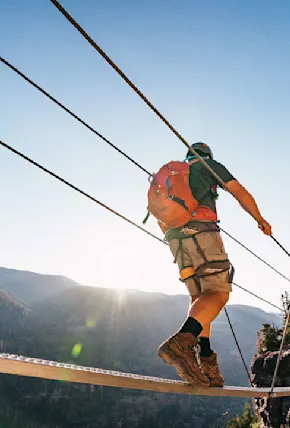
About halfway through the day’s walk, stop into the small workshop of Toru Ueda, a former elementary school teacher and accomplished fisherman who makes hiking packs under his made-to-order label, Blooper Backpacks. Then you'll cross the river on the Shiogo Suspension Bridge, a 240-yard pedestrian-only bridge that was historically used by elementary school children who would, according to the signs, ride their bikes to school with one hand holding the handlebars and the other holding an umbrella. For better or worse, schoolchildren no longer do this, but for those who love walking across an old, narrow bridge that sways and creeks, this is a real humdinger—one of many on the Katsuo Trail.

From here, it’s a short way to the Sango Country Tomoshibi Cafe, which is owned by the parents of one of the founders of the trail, Kuri-san. The cafe has a few small guest cabins you can stay in, all of which sit about 20 feet from a private bend in the river. It was pouring the day we got there, but there were plenty of kayaks on hand to play in the water. At dinner, you’ll want to encourage Kuri-san’s father to play the piano that sits in the dining area.

colleen-hammond-katsuo-trail-guide-chimanji-temple-bow-vert

Paying respects at Chiamnji Temple

colleen-hammond-katsuo-trail-guide-winding-road-vert

Winding roads along the trail

Day 7: Trains & Temples

Day seven starts with a 4-5 mile hike to Ieyama Station, where you’ll catch a train to Shin-Kanaya Station in Shimada City. From the train station, load up on some snacks at the nearby Lawson and continue to hike the rest of the 12-mile day along the river and up into a dense jungle of a forest to Sky Pension Dodan, a hotel sitting on the top of the verdant mountains above Shimada City. The hotel has luxuriously large and private tatami rooms to stay in with views and more views. The owners served us fish and pasta for dinner in the private dining room, and for breakfast, this was one of the few places that had coffee instead of tea for your morning caffeine fix.

A short walk from the hotel is the serene Chimanji Temple, a huge thatched-roof structure surrounded by 10 giant cedars, all around 1,000 years old. Visiting is worth the time and energy after a day of walking.

colleen-hammond-katsuo-trail-guide-river-park

Oigawa Ryokuchi Park in Shimada

Day 8: Kawagoshi Ninsoku & Another Old Bridge

The eighth section of the Katsuo Trail descends into Shimada City, where you can learn about Kawagoshi Ninsoku at the Oigawa Crossing Historical Site. The Kawagoshi Ninsoku were porters in Edo-period Japan who carried travelers and their belongings across the dangerous Oigawa, either on their backs or on platforms called rendai. Bridges were banned on major rivers for military defense during the period, and they played a critical role in travel along the Tōkaidō Road.

The last section of the day is a walk through the Makinohara Plateau, Japan's largest tea plantation. Make sure to stop at the Tea Museum for green tea ice cream and small locally made earthen tea pots (these make great gifts) before heading out on a road that will take you through tea fields as far as the eye can see. This land was formerly cultivated by 250 unemployed samurai, who eventually built the Horai Bridge in 1869 to transport their tea across the river. At 0.6 miles, it's the longest wooden bridge in the world. No, it’s not that rickety, but it is very long, so you'll have time to make up names for all the birds hanging out in the water.

colleen-hammond-katsuo-trail-mouth-of-oi-river

Riding to the mouth of the Oi River

Day 9: Mouth of Oigawa

The last day of the trail is mostly a walk through town, taking you from Shimada City back to where you started at the Ishizuhama Coastal Park beach in Yaizu. The route follows the Oi River through town to its mouth at the Pacific Ocean (it's all paved; a good option to walking is to arrange bike rentals). The area is an expansive city park, and the beach is rugged and rocky, with a windy walk to the impressively wavy area where the river enters the ocean. This was a special sight to see, especially after spending so much time along the river banks for the last few days.

colleen-hammond-katsuo-trail-guide-blossoms

Springtime in the mountains of Japan

When to Hike the Katsuo Trail

Every trail has advantages and disadvantages depending on the season you go. Lucas and others have done the trail in every season. We planned our trip to be walking during the height of the sakura (cherry blossom) season. The mountains and countryside were peppered with large expanses of pink flowers that created a soft, dreamlike landscape for trail learning. The rub was all the rain—three of our nine days on the trail were in pretty consistent downpour—but for a guy who lives in northern New Mexico, experiencing moisture was a godsend.

Shizuoka has a very mild climate—it's almost like the California of Japan—so fall and winter are also great times to walk the Katsuo Trail. If it does snow, which only happens once a year in the high mountain section, the snow won’t go past your ankles. As for hiking the trail in summer, yes, it’s walkable, but as with everywhere in Japan, it’s HOT. If you like the heat, there are lots of rivers, the ocean, and even a nice waterfall to cool yourself down.

colleen-hammond-katsuo-trail-guide-dirt-road


Katsuo Trail Gear Suggestions

Poles — I have been long-distance backpacking since I was in high school, and admittedly, this was the first time I’ve ever used hiking poles. They were fantastic, and I highly recommend them on this trail with its steep ups and downs. I used the MSR Dynalock Ascent Carbon Backcountry Poles and had no problem bringing them in my carry-on on the plane.

Rain Gear — I’m a recently converted poncho guy, so anything lightweight that will cover you and your backpack is gonna do you good. Lucas and Kaori both brought umbrellas on the trip, which at first was a “what the fuck” moment for me, but as the days went on, I realized what a great tool it is. Now I might have to get myself a backpacking umbrella.

Backpack — Part of the beauty of the trip for me was staying at the various inns and hotels, so even though there are camping/hammock places to stay, I’d recommend packing light and sleeping on a shikibuton (Japanese futon floor mattress) each night. That means you don’t have to pack much, so I easily fit all my stuff into a Gregory Nano 28L, with room to buy some gifts along the way.

Translation App & E-Sim — If you don’t speak Japanese, you’ll want to download Google Translate because there’s not a ton of English being spoken on this trail. Not something to fret about, just be prepared. Also, get an e-SIM so you can have cell service!

Ready for more Japanese adventures? Check out our guides to the Michinoku Coastal Trail and hut hiking in the Japanese Alps, plus a list of our favorite Japanese outdoor brands.