The Best Women's Ski Jackets of 2026, Thoroughly Tested in PNW & Japan

The Best Women's Ski Jackets of 2026, Thoroughly Tested in PNW & Japan

Author Photographer
  • Christie Fitzpatrick

From backcountry shells to resort staples (plus a wild bonus) these top ski jackets were tested in nearly every winter condition imaginable

Published: 02-18-2026

Field Mag may receive a minor commission from purchases made via affiliate links.

A lot of ski jacket roundups read like they were written in a fitting room—all specs, no experience. This one wasn't. I've spent all winter living in these jackets. From local touring missions in the B.C. backcountry to resort days at Whistler Blackcomb in torrential storms to sloppy aprés sessions where the errant spray of beer and bubbly tests Gore-Tex's ability to handle grime. This test of the best women's ski jackets covers the tech specs, of course, but leans heavier on experience—if you're keen to learn which jackets works best while huddled in a blizzard or slogging up a skintrack, this round up is for you. The following 11 jackets have earned a permanent spot in my ski gear closet.

It might go without saying, but I’ll say it anyway: When choosing a jacket, fit cannot be overlooked. A slightly less technical jacket that actually fits well will outperform a feature-loaded shell that bunches or restricts. It’s nice to see a steady increase in use cases of PFAS-free waterproofing and recycled materials, which indicates that brands are making genuine efforts toward sustainability.

The best jacket is ultimately the one you stop thinking about because you're too busy skiing.


How I Tested These Ski Jackets

I tested these ski jackets while skiing near my home in Whistler, British Columbia and for a few weeks in Honshu, Japan. Between these locations, I experienced most every condition a mountain can throw at you, from coastal storms dumping heavy, wet snow to bluebird days with a wind chill of -30. I wore them on resort groomers, in the alpine on storm days, and during backcountry touring laps where I was generating a lot of body heat on the uphill and needed serious weather protection on the descent.

This extreme variation in location and condition gave me a chance to evaluate each jacket's performance during real and varied situations to test now only waterproofness but also breathability and overall design. All of which is especially important during downhill skiing and high-output uphill travel (hiking and skinning), and takes into account how functions like pit zips, powder skirts, and pocket placement actually performed in real skiing scenarios, not just on a spec sheet.
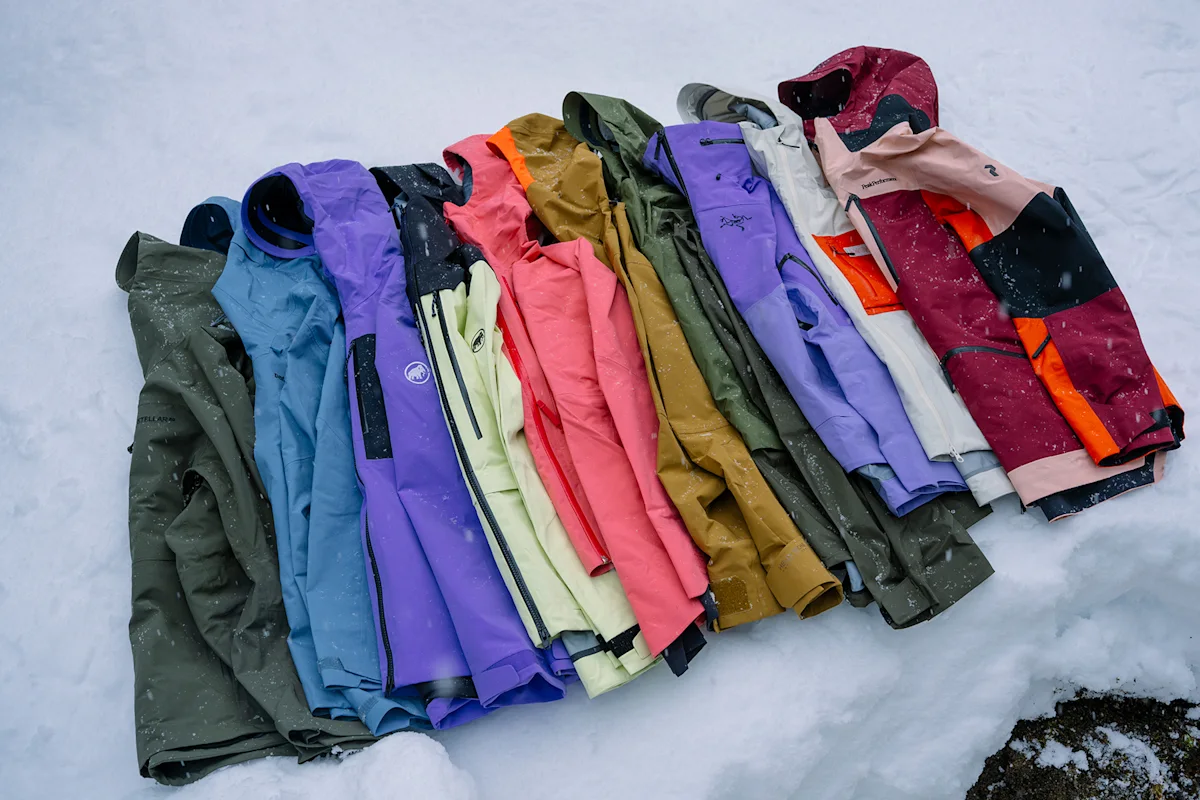
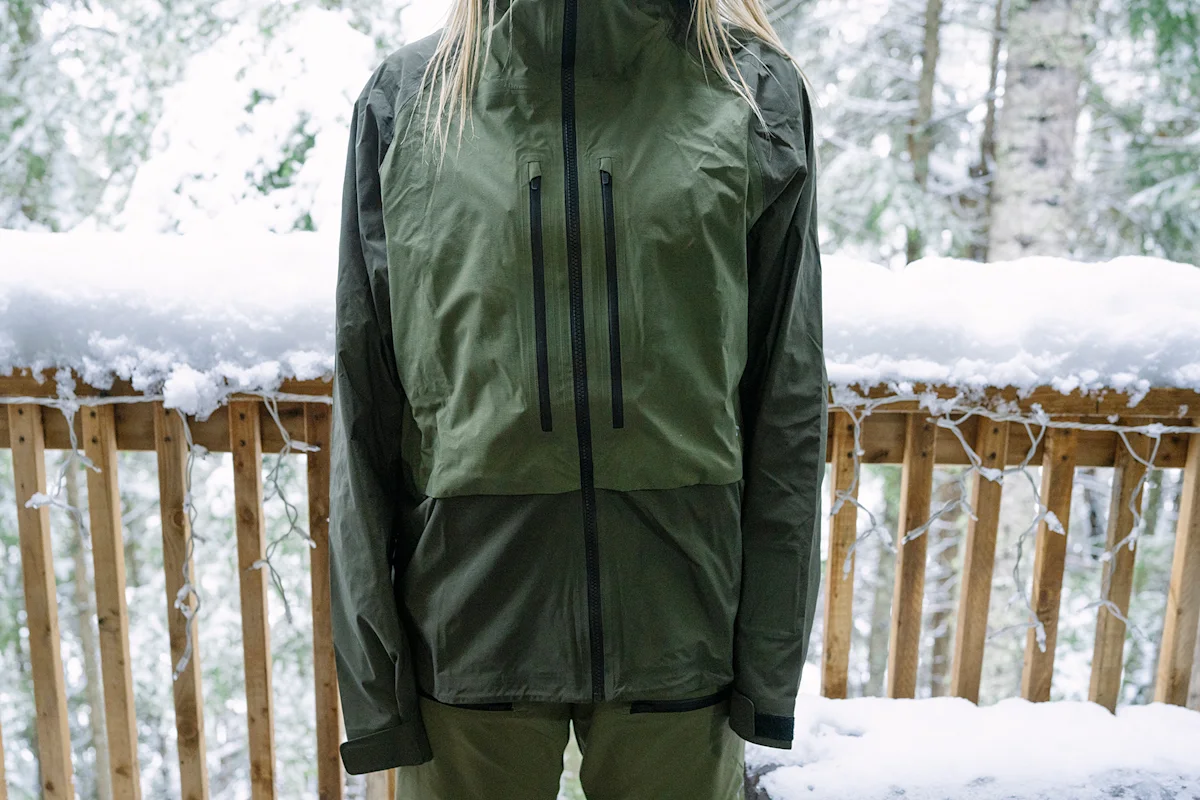
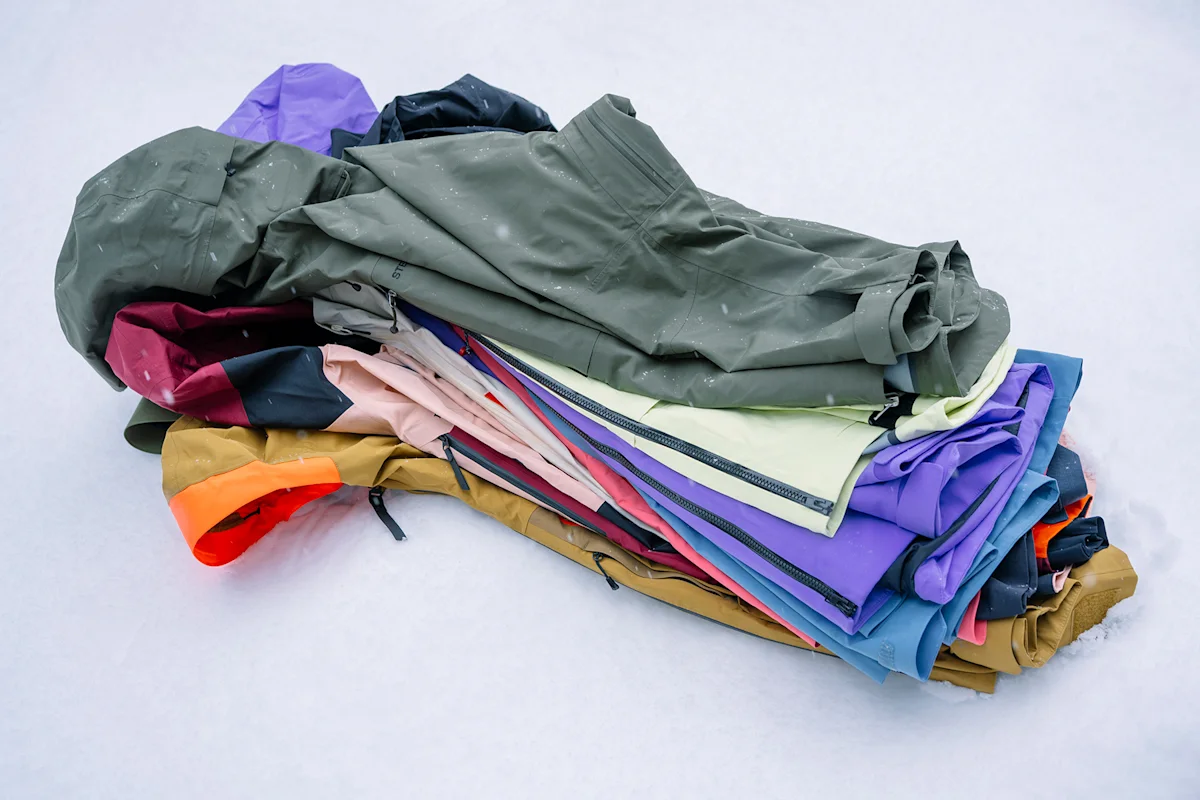
christie-fitzpatrick-best-ski-jackets-hero

Guide Key

Your ideal ski jacket depends less on which has the highest waterproofing numbers and more on where you actually ski and how you ski it. Dedicated backcountry skiers should prioritize breathability and packability (Patagonia PowSlayer, Raide TourTech Shell, Mammut Haldigrat HS). Resort skiers in cold climates benefit from insulation or simplified features (Arc’teryx Inscendia, Helly Hanson Emiko). Those who do both need versatile shells that don't compromise either direction (Peak Performance Vertical Gore-Tex Pro, Norrona Lofoten GTX Pro, StellarEQ Pro).

Click to Navigate

Field Mag's Top Picks for the Best Women's Ski Jackets


Best Women's Ski Jackets of 2026

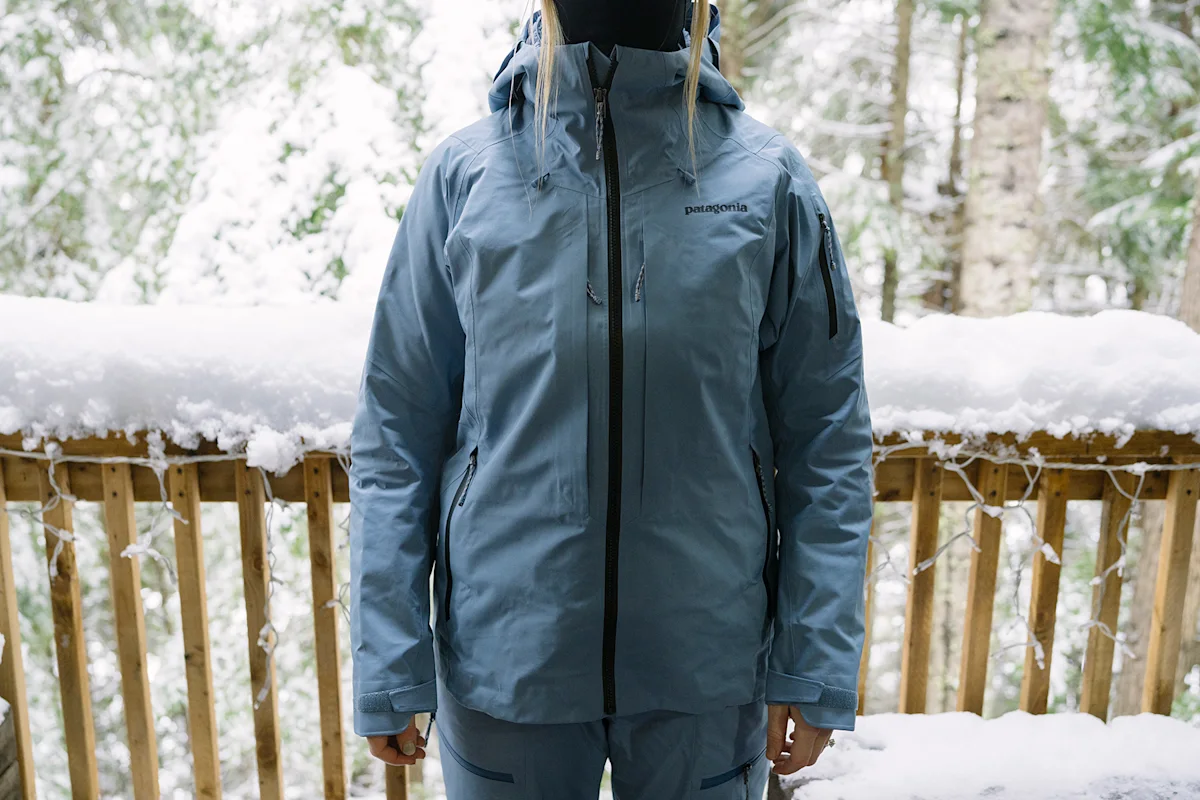
christie-fitzpatrick-best-ski-jackets-patagonia

Photo by Christie Fitzpatrick

Best Overall: Patagonia PowSlayer

Designed for: Backcountry
Fit: Regular/Roomy
Fabric: Gore-Tex ePE Pro 3L
Waterproofing: 28,000mm+ (GORE-TEX Pro)
Weight: 521g
Price: $799

Pros:
- Lightest Gore-Tex Pro shell in this roundup
- Packable and fully PFAS-free throughout

Cons:
- Gore-Tex Pro can feel crinkly/stiff compared to softer membranes

The color, the cut, and the capabilities—these are all reasons I love this ski jacket. But let’s start with my favorite aspect: the PowSlayer has nailed the pocket situation. There are four total, but it's the top two chest pockets that really deliver. They cover half your torso, making them practical for storing skins or larger items (even a camera) without that awkward bulge. One also has a pocket-within-a-pocket for stashing your phone securely.

The newly updated Gore-Tex ePE Pro membrane delivers bombproof weather protection without PFAS chemicals, and at 643 grams for a medium, the PowSlayer Jacket is impressively light for how capable it feels. What sets this apart from other touring shells is a storm skirt that tucks away so it doesn't flap around when you don't need it—a small detail that makes a tangible difference out in the backcountry. The fit runs generous, which means freedom of movement with layers underneath, and it’s slightly less structured than Euro-cut shells (like the ones you'll find from brands like Norrona and Mammut).

Long pit zips handle heat dumping on the up, and as a serial fumbler, I love that the hood adjusts easily with gloves on. At $699, it's an investment. The PowSlayer was designed for backcountry touring, so I wasn’t expecting this to take the top spot as an all-rounder, but I ended up reaching for this jacket more than the rest, even when I was skiing at the resort. It was comfortable and reliable in any given weather at my home resort of Whistler, and it looks dang good too.

SHOP AT PATAGONIA

christie-fitzpatrick-best-ski-jackets-raide

Photo by Christie Fitzpatrick

Best Ultralight Ski Touring Jacket: Raide TourTech Shell

Designed for: Backcountry ski touring/Freeride
Fit: Oversized
Fabric: TourShell-01 (PFAS-free); 3L 20d nylon, UHMWPE ripstop, hydrophobic polypropylene membrane
Waterproofing: 30,000mm/30,000g MVTR; PFC-free DWR
Weight: 358g
Price: $599

Pros:
- Exceptional breathability
- Ultra-packable with clever touring details

Cons:
- Very minimalist; only two chest pockets, no powder skirt, no hand pockets

When only the most technical will do, Raide delivers. I was very excited to test this jacket, having met the founder Kyle in a Japanese izakaya on a ski trip last year. Raide’s proprietary TourShell-01 fabric combines a polypropylene microporous membrane with UHMWPE ripstop reinforcement—essentially, a ripstop weave stronger than steel. Coming in at nearly half the weight of most other touring jackets in this lineup, the result is a shell that prioritizes lightness and breathability above all else.

Here's the thing about the TourTech Shell: it doesn't feel like a ski jacket. It feels like a windshell or a mountain bike jacket (in a good way). I’m delighted to report that this PFAS-free fabric is more breathable than any other jacket I've tested—while still being highly waterproof and durable. But it's not entirely pared down and lacking in useful features. On the TourTech, the pocket layout is minimal but purposeful: two large chest pockets with interior access that double as vents, plus one big interior pouch that's big enough for climbing skins. The pass-through function used in the two chest pockets is smart, allowing you to reach through to access your midlayer or beacon without fully opening the jacket. The pockets stay out of the way of a climbing harness and tools if you're getting technical, and you can easily reach the pit zips with the corresponding same-side hand, giving you options to quickly and easily vent without too much fidgeting.

The jacket uses a niche design that makes perfect sense for dedicated touring but may feel a little overengineered for and (underappreciated by) resort skiers. Forget a powder skirt or bib integration, Raide is laser-focused on uphill efficiency. The jacket even boasts a signature breathable mouth vent that actually works. I’m pretty claustrophobic so I was really psyched by this addition. The lightweight, packable construction means this shell might spend most of its life compressed in your pack, then performs flawlessly when weather rolls in.

SHOP AT RAIDE

christie-fitzpatrick-best-ski-jackets-mammut

Photo by Christie Fitzpatrick

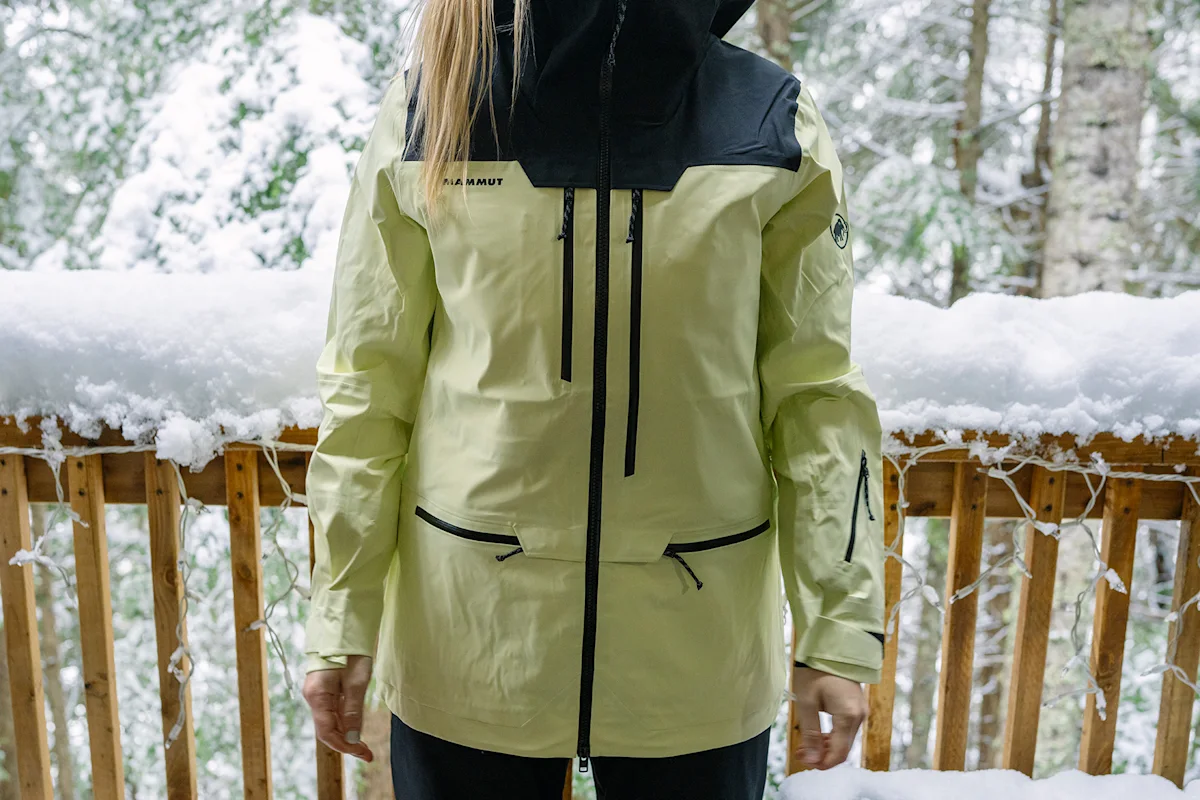
Best Versatile Ski Touring Shell: Mammut Haldigrat HS

Designed for: Backcountry ski touring/Freeride
Fit: Regular, long
Fabric: DRYtech Pro (20K/20K); 3L recycled polyamide;
Waterproofing: 30,000mm; PFC-free DWR
Weight: 594g
Price: $499

Pros:
- Solid resort-to-backcountry versatility at a reasonable price with PFC-free DWR
- 100% post-consumer recycled polyamide; one of the stronger sustainability stories in this roundup

Cons:
- Mammut's in-house membrane doesn't match Gore-Tex Pro or Dermizax NX in prolonged heavy precipitation

Swiss engineering meets backcountry pragmatism in this shell from Swiss mountain brand Mammut. The Haldigrat uses Mammut's proprietary DRYtech Pro membrane—it's not Gore-Tex, but it's competitive in waterproofing and breathability numbers—in a package that bridges the gap between dedicated touring shells and resort-ready hardshells. With some unseasonably warm weather, I took this jacket out on a warm spring-like morning and to give it a good test over several transitions. I found I could dump heat on the climb easily, zip everything back up on top without feeling restricted or clammy, and stay warm when waiting for those darn splitboarders in my group to be ready.

A key ingredient for this versatility is the removable powder skirt. Keep it on for resort days or deep backcountry missions, zip it off when you're focused more on uphill efficiency. Add adjustable hook-and-loop-cuffs (not always a given on touring shells) and long underarm vents that extend nearly to the waist, and you've got a shell that adapts to how you ski rather than forcing you into one category.

The fit runs slightly trim, closer to European sizing, which means it layers well without excess fabric but won't accommodate super bulky midlayers or puffies. Made from post-consumer recycled nylon, it's lighter than you'd expect for the durability and feature set. It’s also a very smooth and nice feeling fabric that I kept catching myself running my hands over.

At $549, the Haldigrat HS undercuts Gore-Tex-equipped competitors while remaining on par in technical performance—a rare combination that makes it a great all rounder for a skier who does a bit of everything and only has enough budget for one jacket.

SHOP AT MAMMUT

christie-fitzpatrick-best-ski-jackets-peak-performance

Photo by Christie Fitzpatrick

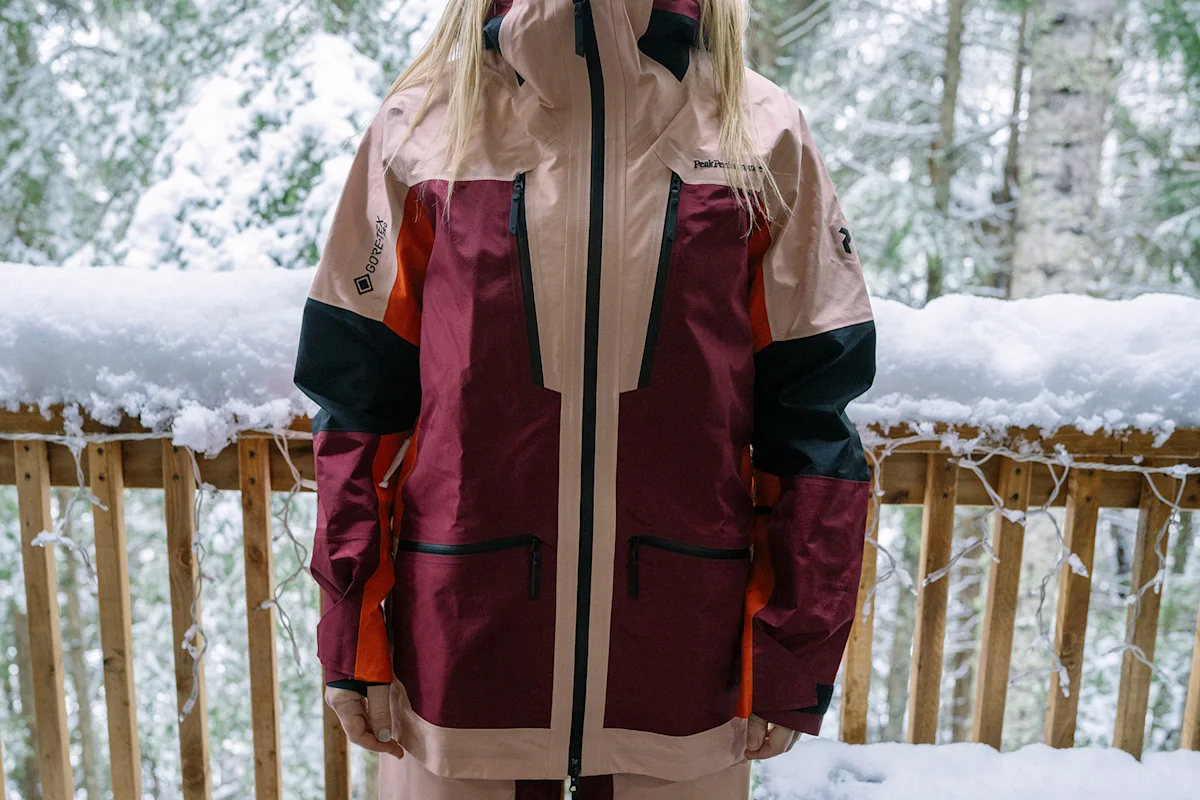
Best for Looking Good & Skiing Good: Peak Performance Vertical Gore-Tex Pro

Designed for: Freeride/Backcountry
Fit: Relaxed, long
Fabric: Gore-Tex Pro
Waterproofing: 28,000mm
Weight: 706g
Price: $850

Pros:
- Undeniable build quality
- Guaranteed on-mountain steeze

Cons:
- Expensive
- Maximalist look that might not be a fit for everyone

The Vertical Gore-Tex Pro 3L is Peak Performance’s top-tier shell, and it looks and feels that way. Built with Gore-Tex Pro, it’s engineered for maximum waterproofing and weather protection in the harshest alpine conditions. In testing, the jacket consistently impressed with its ability to shut out wind, snow, and sustained storms without sacrificing mobility. In January, we got hit with three days of relentless coastal storm in British Columbia, the kind where you don't really want to go skiing but feel like you should because it's a Saturday and you made no other plans. It rained at the base of the mountain, snowed sideways up top, and the wind was gusting at 70km per hour. That's the stuff that really exposes a jacket's weak points, but on this jacket I didn't find any.

While its performance credentials make it suitable for just about anyone heading into serious terrain, the premium price point and bold color blocking may not be for everyone (it's not exactly understated). When I wear the Vertical, I look and feel like a pro. Whether or not I ski like a pro is up for debate, but I get the feeling this jacket was designed with "look good, feel good, ski good" on the brief. Peak Performance nailed the technical all-rounder category with thoughtful details like a reinforced peak on the hood (which you can also use to hang the jacket), a longer cut that provides a lot of coverage and a looser freeride look, plus proper cuffs.

The pocket situation is comprehensive: there are two internal pockets (one zippered, one mesh), two large horizontal chest pockets, and two large vertical exterior pockets. The removable bib-integrated snow skirt gives you flexibility depending on whether you're touring or resort skiing. Gore-Tex Pro construction provides top-tier weather protection without unnecessary bulk—there’s a reason this kit is often seen on the Freeride World Tour on the backs of the steeziest skiers out there.

The fit is slightly relaxed without being baggy; there’s room for layers but the design is definitely still maintaining structure and the signature PP silhouette. It's not trying to be the lightest or the most feature-packed. Instead, it does everything well without obvious compromises, making it a sexy, versatile option for skiers who move between resort and backcountry.

SHOP AT PEAK PERFORMANCE

christie-fitzpatrick-best-ski-jackets-amundsen

Photo by Christie Fitzpatrick

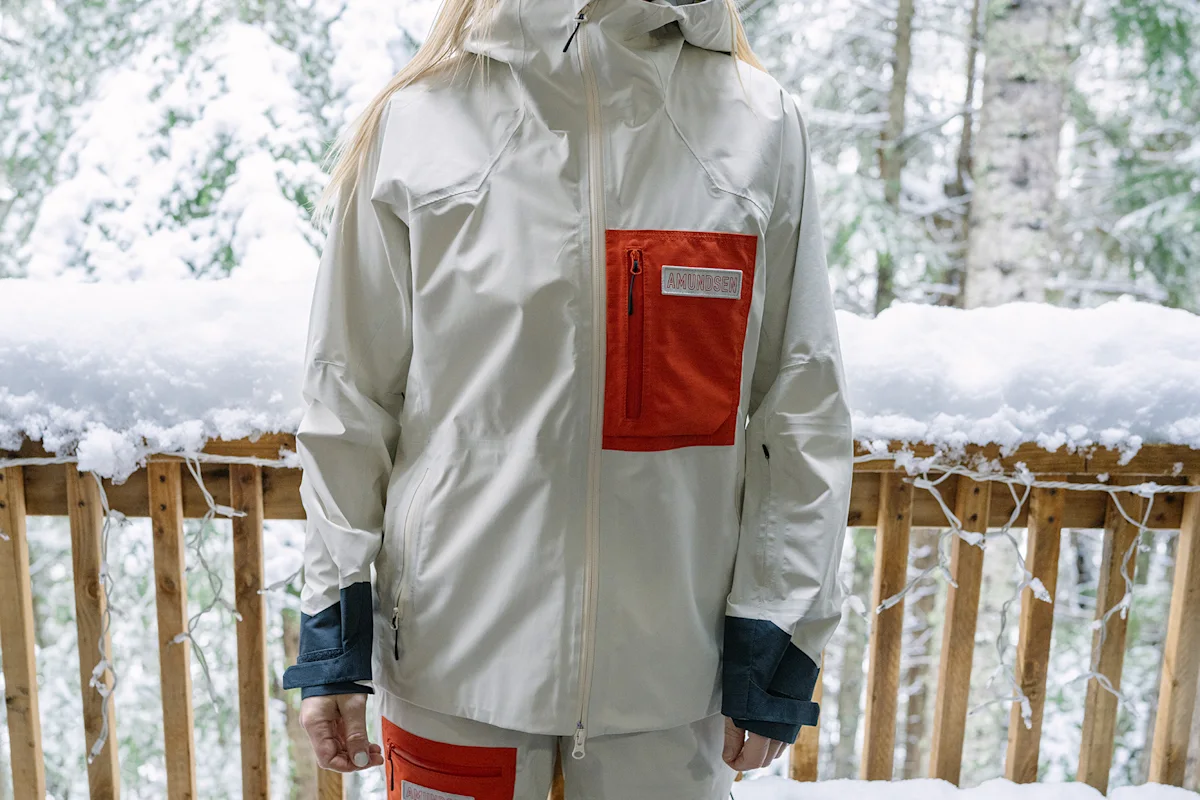
Best Classic Design: Amundsen Mountain Airy Shell

Designed for: Mountaineering/Ski Touring
Fit: Regular, relaxed
Fabric: 3L recycled nylon ripstop
Waterproofing: 30,000mm/30,000g/m²/24h
Weight: 392g
Price: $699

Pros:
- At only 40g heavier than the Raide TourTech, this is a sleeper ultralight jacket
- Four-way stretch means this jacket is extremely comfortable
- Nylon is 54% recycled ocean waste

Cons:
- Waist-length cut means no butt coverage, most may want to pair with bibs

This jacket's telltale Scandinavian design comes with the reliability and quality Norwegian brands are known for. The lone red pocket against muted fabric is all the branding you get from Amundsen here, a brand that deploys snowsport nostalgia in flashy designs. In perfect opposition to its overstated Swedish neighbor at Peak Performance, the Norwegians enter the chat with a strong and stylish shell that deserves a spot in the top ten. Some of my favorite kinds of gear tests are just a regular Tuesday—lapping the chairlift with friends, ducking into the lodge for a cinnamon bun and heading back out. Read: definitely not earning my turns. No epic conditions, just a full day of skiing to see how a jacket wears in a more everyday situation; where it bunches up, whether the pockets are actually usable with gloves on, etc. On a string of back-to-back sunny days exploring the resort and side country of Whistler, this jacket totally delivered.

The Norwegians approach ski gear with a refreshing less-is-more philosophy, but what is there had better work flawlessly. The Mountain Airy Shell embodies this: four-way stretch fabric, serious waterproofing numbers, and a fit that's slim and flattering without feeling restrictive. In other words, it isn't that oversized freeride look that dominates the market these days, but it's still forgiving enough to layer without feeling like you're a boil-in-the-bag chicken.

The jacket's PFC-free construction and ripstop face fabric handle alpine conditions while maintaining flexibility. It's noticeably quieter than most technical shells, with no crinkly Gore-Tex sounds on the chairlift, and the stretch means you forget you're wearing a hardshell. It presents like a softshell-hardshell hybrid—the comfort of a soft-shell with the impermeability of a hardshell. The aesthetic skews more understated European mountain town than brightly colored American ski resort, which feels refreshing.

At this price point, you're paying for Norwegian design sensibility and materials innovation. If you're drawn to brands like Norrøna and Houdini, Amundsen sits comfortably in that category: thoughtful, sustainable, and built to last.

SHOP AT AMUNDSEN SPORTS

christie-fitzpatrick-best-ski-jackets-trew

Photo by Christie Fitzpatrick

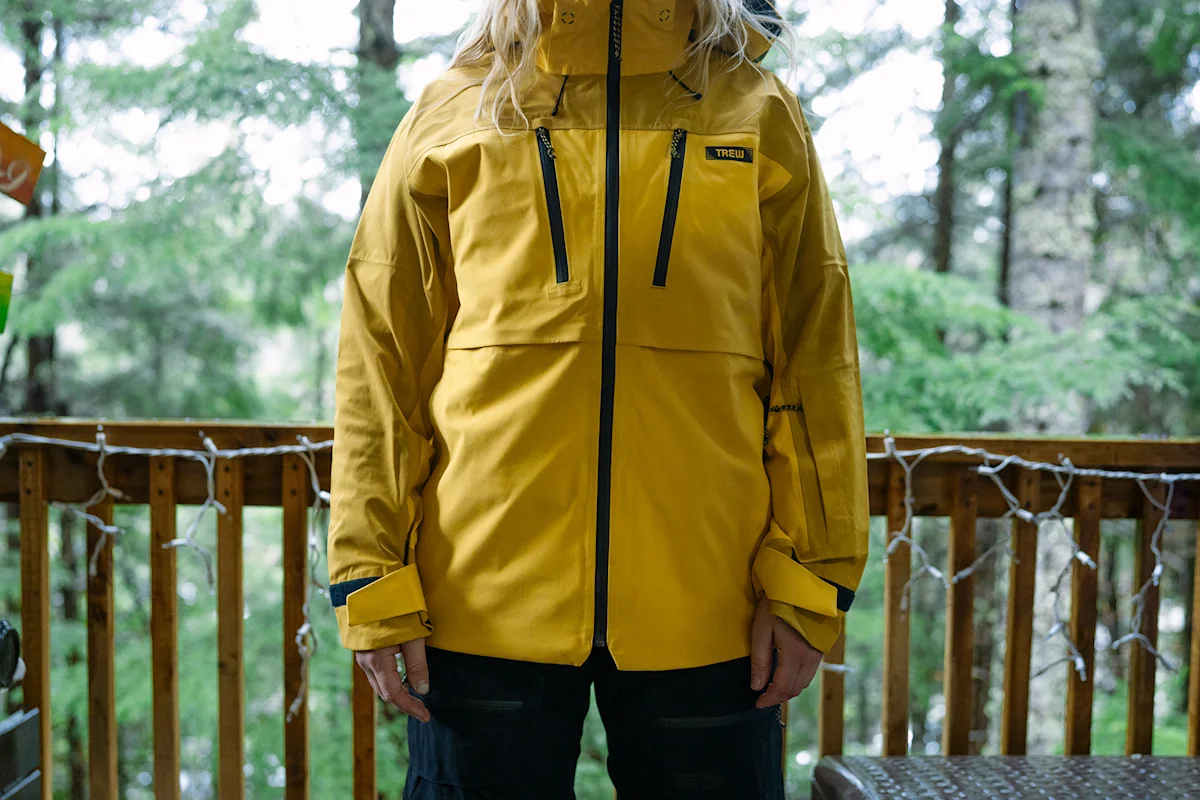
Best for Deep Days & Serial Pocket Fillers: Trew Stella Primo

Designed for: Resort/All-Mountain
Fit: Relaxed, regular
Fabric: 3L PNW Primo; 100% recycled nylon oxford weave with mechanical stretch, PFAS-Free
Waterproofing: 20,000mm/20,000g/m²/24h
Weight: 836g
Price: $599

Pros:
- Burly build with 8 pockets, RECCO, removable powder skirt
- PFAS-free
- Inclusive sizing to 4X in a women's-specific freeride silhouette

Cons:
- Heavy considering it’s waterproofing limited to 20,000mm
- Not suitable for touring

The designers at Trew Gear's Portland, Oregon HQ are no strangers to dodgy weather (read: they ski in atmospheric rivers more often than cold smoke). The women-specific Stella Primo reflects that pedigree. It has trustworthy waterproofing, a burly construction, and a fit that's relaxed without being shapeless. This is a jacket built for skiers who explore the whole mountain, even in unpredictable winters like those common to the PNW.

What stands out is the durability—this jacket feels pretty bombproof. Thick face fabric and quality components mean this jacket takes abuse without showing it. Mine received the brunt of tree branches, pack abrasion, and the general chaos of deep days. Seven well-placed pockets give you space for essentials without turning you into a walking storage unit. The modern freeride styling and thoughtful colorways look current but still different from major ski brands whose color palettes overlap more and more every year.

The fit of the Stella Primo runs generous, and those between sizes or who prefer a slimmer cut should size down. The flared cuffs are polarizing (you'll either love them or find them unnecessarily retro), but they work well with bulkier gloves. Underarm vents handle heat on bootpacks and sidecountry laps, though this isn't a dedicated touring shell. It's heavier and less breathable than backcountry-specific options—the trade-off for bombproof construction.

For resort skiers who venture into whatever conditions the mountain throws at them, the Stella Primo delivers. Trew's repair program means this jacket stays in rotation longer than trend-focused alternatives. If you ski 50-plus days a season and prioritize reliability over grams, this makes sense, and it's priced more competitively than other jackets in this roundup.

SHOP AT TREW

christie-fitzpatrick-best-ski-jackets-arcteryx

Photo by Christie Fitzpatrick

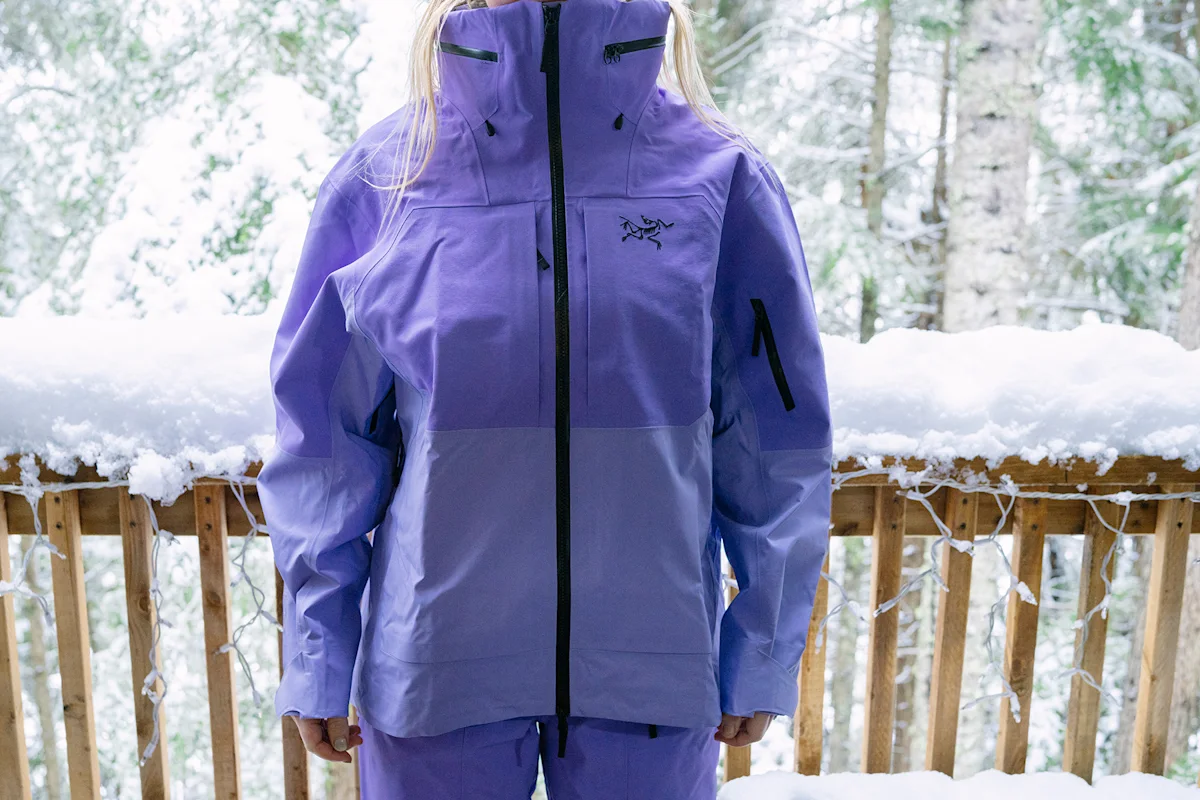
Most Unique Design: Arc'teryx Inscendia

Designed for: Resort/All-Mountain
Fit: Relaxed, freeride-specific
Fabric: 3L Gore-Tex Pro ePE; 80D body and 200D canvas in high-wear zones
Weight: 580g
Price: $900

Pros:
- Hybrid 200D canvas reinforcements give outstanding durability in high-wear areas
- Fully loaded with features

Cons:
- Expensive
- Stiff high collar can feel overbearing on warm days with low wind

Arc'teryx departed from longstanding trends with the Inscendia, opting for a shorter, roomier cut with wide shoulders and hips that doesn't restrict movement. The design’s signature zip-away hood stores in a dedicated wrap-around compartment when you don't need it, but the real genius is the high, stiff collar—it shields your face from wind even without the hood deployed. The double-zip front closure is notably smooth and quiet, and the back cinch lets you tailor the fit to your preference.

Four exterior pockets cover storage needs, though the hand pockets run narrow for bulkier items despite thoughtful zipper placement. What you don't get: snow skirt, bib integration, or interior cuff gaiters. Arc'teryx stripped those features in favor of a cleaner, more versatile design. The halfway waist cinch allows on-the-fly adjustments without restricting your hips.

It's worth noting that Arc'teryx makes an Inscendia One Piece in this same line, and I love that even more, though it doesn’t technically fit in a jacket roundup. The one-piece construction with full-length side zips (similar to the brand's Sentinel bib) is so steezy, with an interior belt and that same quality double-zip closure. If you're considering the Inscendia jacket, it might also be worth looking at the one-piece—it takes the design concept further.

As a hardshell with no insulation, this is built for layering, with Gore-Tex Pro construction that handles everything from resort days to touring to sledding. The fit is characteristically Arc'teryx—precise and considered, but with more room than their typically athletic cuts. At $750, you're paying for adaptable design and the flexibility to style the jacket to your own look rather than category-specific features (and, of course, that Dead Bird logo on the chest).

SHOP AT ARC'TERYX

christie-fitzpatrick-best-ski-jackets-norrona

Photo by Christie Fitzpatrick

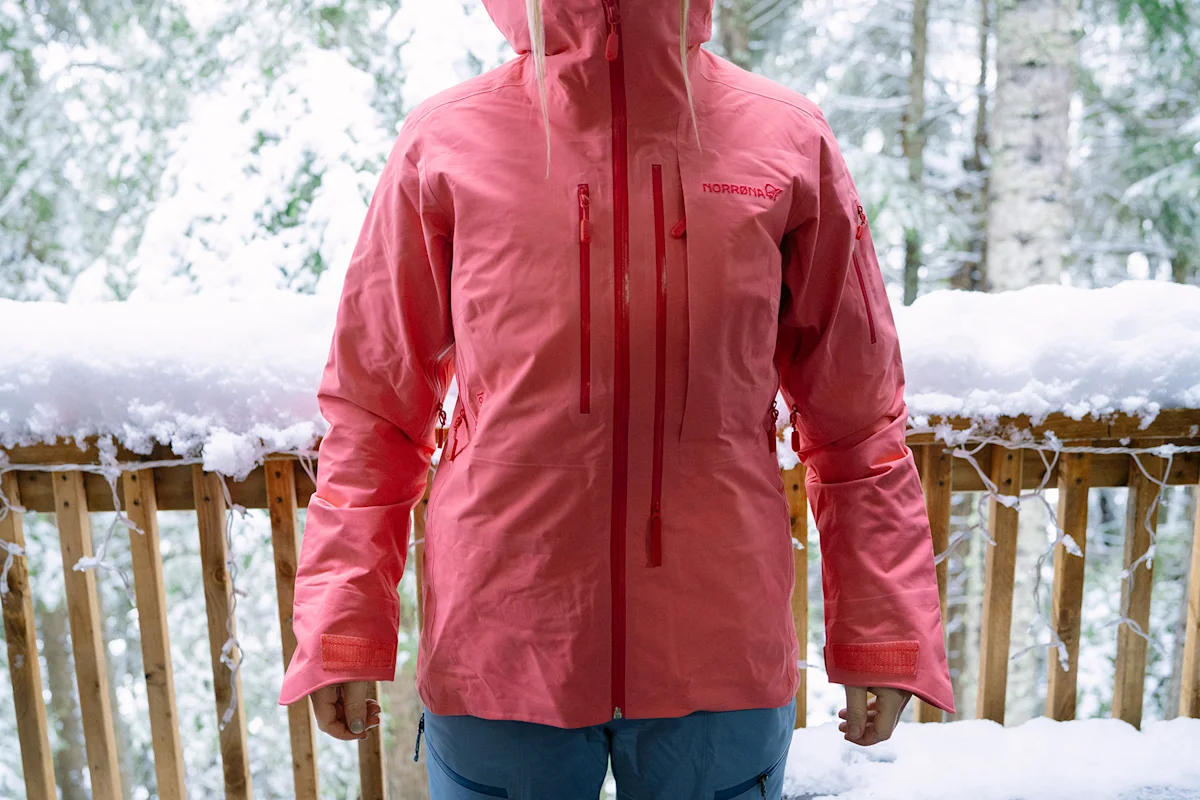
Best High-Performance Shell: Norrøna Lofoten GTX Pro

Designed for: Backcountry/All-Mountain
Fit: Relaxed, regular
Waterproofing: 28,000mm; Gore-Tex Pro ePE; PFAS-free
Fabric: 3L Gore-Tex Pro ePE, 70D x 160D recycled nylon
Weight: 602g
Price: $899

Pros:
- Best-in-class Gore-Tex Pro ePE protection with PFAS-free membrane
- Exceptional ventilation with oversized ~20-inch pit zips plus a secondary chest vent

Cons:
- Expensive
- No hand pockets (Napoleon chest pockets only)
- Gore-Tex Pro can feel stiff/crinkly and overkill for casual resort days

The north of Norway, where this jacket draws its namesake from, gets a lot of weather. Norrøna's pro line is made of the kind of gear that can handle it; it doesn't just keep you dry, it makes you feel ready for anything. You get a sense of that in the sturdiness of this fabric, which is unbeatable for those who are using their winter outerwear to the max. I wore this through a classic Whistler day, which started with heavy, wet snow on the alpine that transitioned to full-on rain near the base. By the time I got to the bottom I was soaked on the outside but completely dry underneath.

The Lofoten manages something that's difficult for ski jackets to achieve: it's both technical and fun to look at, delivering serious mountain performance in a cut that's designed for women's bodies. Like the Arc'teryx Inscendia, it has departed from the longer cut style that many freeride shells have, but instead of being wide and a little stocky, it's tailored to a classic female silhouette. The fabric feels substantial—the cut is more refined than many burlier shells, but it still feels like it could survive even the craziest Norwegian storms. I found the pockets to be well-placed and easy to use while wearing a backpack. And the ventilation system under the arms and in the front also works great.

Feature-wise, it's comprehensive: there's a removable bib-integrated snow skirt, integrated hand gaiters, Velcro covers for pocket/vent openings. There are two big chest pockets (they're not quite as massive as the PowSlayer Jacket's, but big enough), a small inside storage pocket, and one dedicated phone pocket. There's even a thoughtful safety message about phone interference with avalanche transceivers printed inside.

Recently, there's been a push to stop making women's gear in pink and other typically "feminine" colors. As a result, women's ski colorways have leaned into muted hues—or they're just black—which, in my opinion, has made them boring for a while. I for one embrace the return of coral to the ski jacket palette!

The GTX Pro is a great option for those who want to be fully stormproof, stylish, and ready to conquer the mountains (or just a very wet NYC commute).

SHOP AT BACKCOUNTRY

christie-fitzpatrick-best-ski-jackets-stellar-eq

Photo by Christie Fitzpatrick

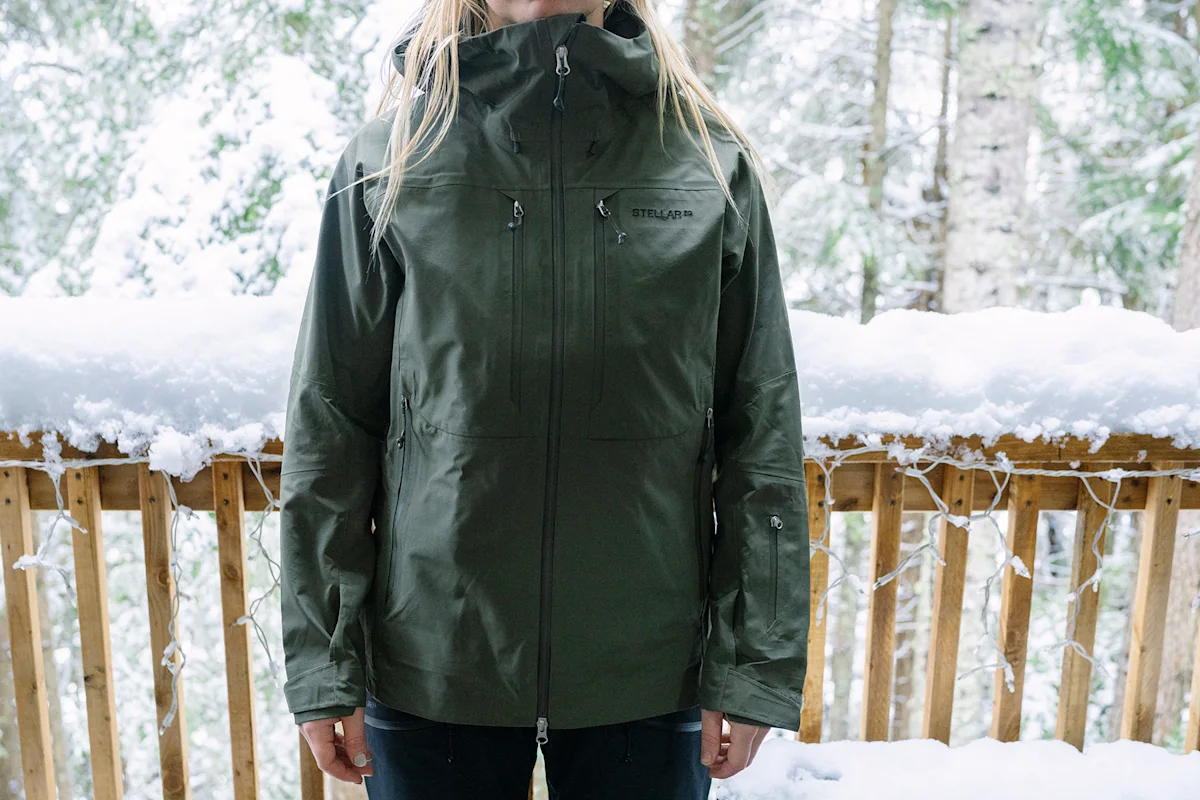
Best Value Performance Shell: StellarEQ Pro

Designed for: Backcountry/Freeride
Fit: Relaxed, roomy freeride
Fabric: 3L recycled nylon with Dermizax NX membrane (154 g/m²)
Waterproofing: 20,000mm+/20,000g/m²/24h; PFAS-free DWR
Weight: 602g
Price: $749

Pros:
- Dermizax NX is quiet, smooth, and highly breathable
- Less expensive than other big names

Cons:
- 20K waterproofing is solid but a step below Gore-Tex Pro in sustained heavy rain
- Less retail availability for trying-on purposes

Stellar Equipment is a Swedish outerwear brand hailing from Åre, Sweden. It was founded in 2015 with a direct-to-consumer model, meaning there's no retail middlemen, just really well-made technical ski and outdoor gear sold online. The company is focused on durability, timeless design, and building pieces that are tweaked and improved only when necessary rather than every season.

The first thing you notice about the StellarEQ Pro is that the jacket feels very serious, designed for hardcore winter conditions, without any unnecessary fluff. The material has a noticeable texture in your hands and it’s very waterproof, though it doesn't have the premium touch of Gore-Tex Pro shells. It feels like it’s designed for hard charging freeriders who are looking for a kit to do it all for years to come.

We had a (rare and welcome) string of bitter -20-degree days in the PNW recently that have made for great skiing but we're all a little out of our comfort zone when it comes to the temperature. Most jackets feel like cardboard in that kind of cold, but this one stayed soft and supple, and I could still move freely without feeling like my jacket was going to snap in half on the chairlift. It cuts the wind completely and provides great range of movement.

The chest pockets are smaller than those found on dedicated touring shells like Raide's, and there's one small pocket on the inside. There aren't any inner cuff gaiters, which is a trade-off at this price point. The two-way zip on the front is notably smooth and quiet—it's the same high quality found on the Arc'teryx Inscendia, which costs significantly more.

For skiers who want solid performance without the premium brand markup, the StellarEQ Pro delivers excellent value. The fit leans relaxed, which works for layering though some might find it slightly baggy.The jacket still comes in at a fairly high price point and only a few muted color options. If you're going to drop the cash on this kit planning to really use it for years to come, you can be confident that this kit will hold up and the quality is well worth the price.

SHOP AT STELLAR EQUIPMENT

christie-fitzpatrick-best-ski-jackets-helly-hansen

Photo by Christie Fitzpatrick

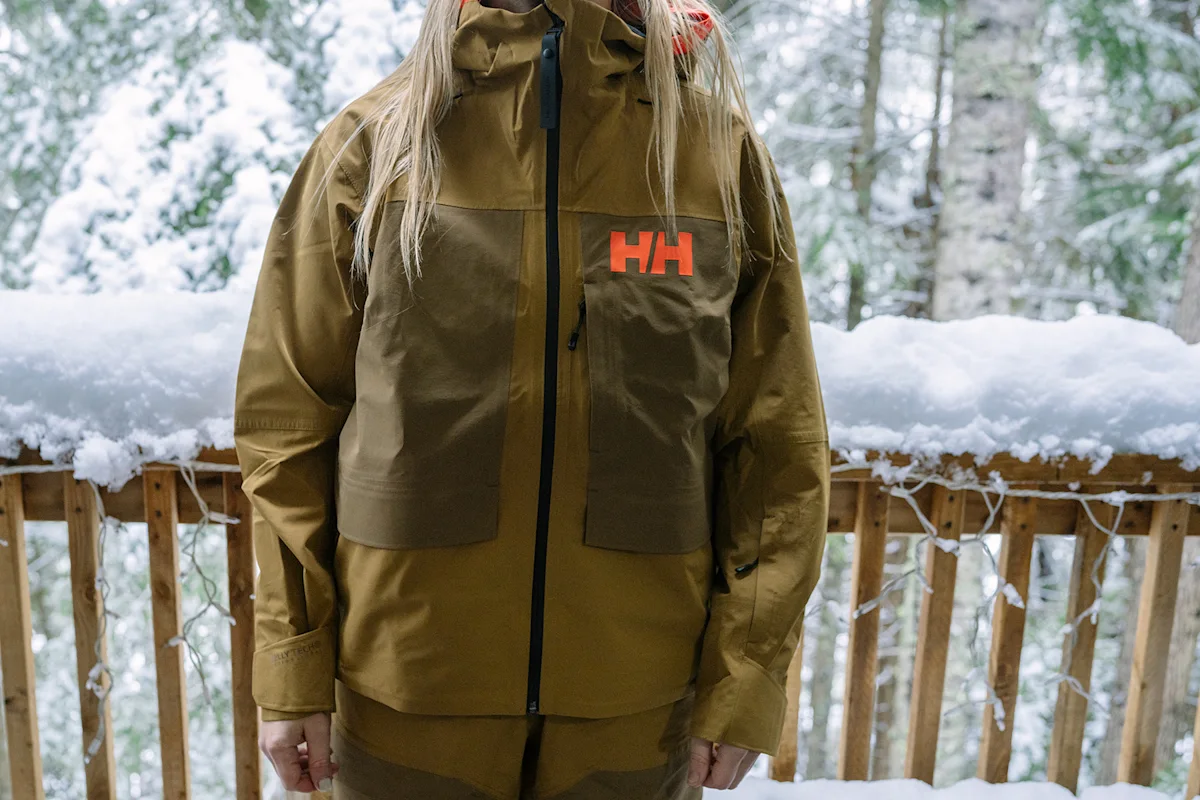
Best Affordable Jacket for Resort Skiing: Helly Hansen Emiko

Designed for: Resort/All-Mountain
Fit: Relaxed, boxy (Japanese -inspired)
Fabric: HELLY TECH Professional 3L, fully seam-sealed with DWR-treated outer
Waterproofing: 20,000mm
Weight: 575g
Price: $390

Pros:
- Cheap! This is a much more accessible price point than most competitors here
- Unique Japanese design

Cons:
- Not as technical as the other jackets, but that's kind of the point
- Helly Tech Professional won’t match Gore-Tex in extreme-weather performance

The Emiko is straightforward about what it is: a resort jacket with a shorter, minimal feeling that prioritizes mobility and affordability. I took this one to Japan for a week of waist-deep, cold smoke resort skiing, and it held up beautifully. There's no inside pocket, no venting, and no pretense about backcountry capabilities. What you get is a jacket that's as waterproof and breathable as your average resort skier needs, with a medium-sized exterior chest pocket, small exterior front pockets, a pass pocket on the arm, and a clean design that works just fine for all-day groomer laps.

On the snow around Whistler, the three-layer HELLY Tech Professional fabric—rated at 20,000 g/24hr/m² breathability, which is shy of top-end Gore-Tex, but very good—proved protective from wind, dry snow, and wet snow alike. Sealed seams add to the solid protection. At no point did the jacket feel inadequate for keeping the elements at bay. It stayed reliably waterproof even when I was laying in the snow to take photos. The fabric is decently breathable for a resort-focused shell, too.

The more approachable price point reflects the Emiko jacket's simplified feature set—you'd expect this to be cheaper than the technical shells, and it is. For skiers who don't venture beyond resort boundaries and don't need extensive pocket systems or touring-specific features, the Emiko delivers reliable protection without paying for capabilities you won't use, and maintains those that you will, like that integrated pass pocket on the arm for the lift lines. It's refreshingly honest in a category full of "do-everything" marketing. This is a minimalist jacket without a lot of bells and whistles—it simply does its job of keeping you dry and happy on the hill. If you ski primarily at resorts in moderate conditions and want something that works without overthinking it, the Emiko is definitely worth considering.

SHOP AT HELLY HANSEN

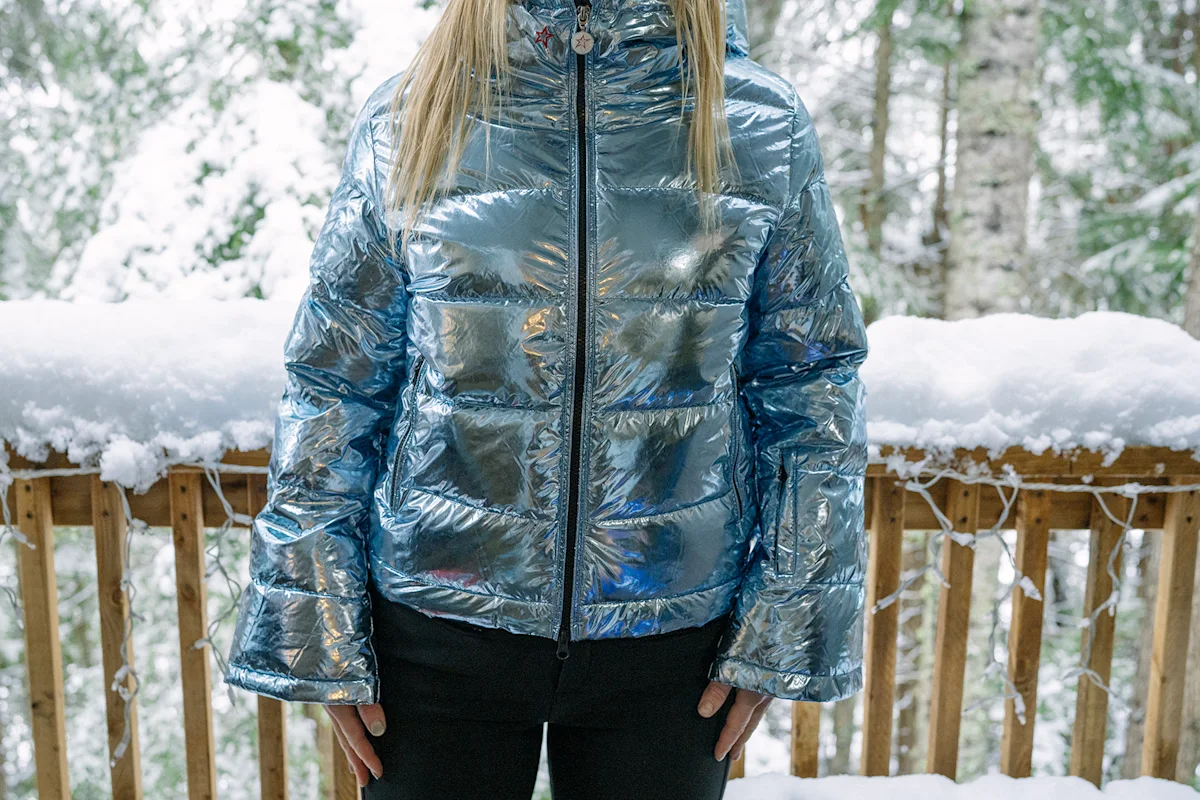
christie-fitzpatrick-best-ski-jackets-perfect-moment

Photo by Christie Fitzpatrick

BONUS: The Head Turner If Performance Isn't Your Priority: Perfect Moment Polar Flare Down

Designed for: Resort/Après-ski
Fit: Relaxed, slightly oversized, cropped
Fabric: Nylon Shell, Goose Down Fill
Waterproofing: Water-resistant
Insulation: 700-fill-power down
Weight: 900g
Price: ~$795

Pros:
- Statement retro silhouette with warm 700-fill down

Cons:
- No waterproof membrane; won't hold up in prolonged storms

This ultra fun jacket is designed for skiers who prioritize aesthetics and warmth, and aren't planning to venture far from the resort—think Aspen groomers rather than Teton backcountry (and maybe more après than either of the former). Perfect Moment is a brand that focuses on fashion-forward ski apparel first and technical outerwear second, though this jacket isn't all show. If that sounds like your style, the Polar Flare performs well in even the coldest temps. I wore it to the infamous Longhorn Saloon at Whistler’s base (IFKYK), and, spoiler: I got a lot of compliments.

The jacket delivers on looks with an iridescent sculptural silhouette, relaxed and cropped fit, and design details that truly need to be seen in person to be appreciated. It sits just above the hip with an elasticated hem and toggles that let you adjust the fit to your preference. The 700-fill-power down insulation will keep you warm on frigid days (with proper layering, of course), and thoughtful details like the storm placket, chin guard, and high-neck collar add extra protection.

And don’t be fooled by this jacket's luminescent appearance, it includes legitimate ski features like a helmet-compatible (and detachable) hood, an adjustable powder skirt, an internal goggle pocket with cloth cleaner, an internal chest pocket, and a dedicated ski pass pocket on the arm. Two front-zip pockets, elastic cuffs, and full lining round out a package that's more functional than you might expect from a fashion-forward skiwear brand.

Still, the fabric choices and construction reflect Perfect Moment's priorities: this jacket isn't built for wet weather or hard use outside groomed terrain. It's a perfect layer over any ski or après outfit, and if you're the one in the group more keen on popping champagne than logging vertical, and style matters as much as function in your ski gear choices, Perfect Moment delivers a distinctive look that stands apart from ski jackets made by technical brands. At $895, it's a premium price point for a premium look.

SHOP AT PERFECT MOMENT


What To Consider When Buying a Ski Jacket

christie-fitzpatrick-best-ski-jackets-stacked

Fit

Most ski jackets come in a fit that's regular, relaxed, or oversized. Fit is all about preference.

A regular fit is more streamlined and moves with you without excess fabric flapping in the wind, but still has enough room to layer a midlayer underneath.

Relaxed and oversized fits are popular in the freeride world and give you more room to move and more room for layers, but they can also catch wind and feel bulkier under a backpack.

Whichever you go with, pay attention to sleeve length—sleeves should cover your wrists with arms extended—and torso length, which should be long enough to overlap ski pants when you're bent over buckling boots.

Waterproofing

Waterproof ratings are measured in millimeters and the rating is commonly marked on tags and in online product descriptions. Aim for at least 10,000mm for resort skiing where there is a chance of precipitation, and 20,000mm or more for wet coastal conditions and heavy snowfall.

You'll also see 2-layer (2L) and 3-layer (3L) construction marked. A 2L construction bonds the waterproof membrane to the outer fabric with a separate hanging liner inside. Jackets made this way are more affordable and great for most skiers. In a 3L construction, the waterproof membrane is bonded, sandwich style, to both the outer fabric and inner liner, creating a lighter, more durable laminate. This is the gold standard for backcountry use, but 3L jackets tend to be more expensive. Either way, make sure the jacket has fully taped seams.

Breathability

A jacket's breathability rating, measured in grams, tells you how well it transfers body-generated moisture vapor out through the fabric and membrane. Look for at least 10,000g for resort days, which tend to be low-action and have built-in chairlift breaks, and 15,000g or higher for ski touring. Pit zips are equally important here—even the best membrane has limits when you're bootpacking uphill, and being able to dump heat through underarm vents makes a huge difference.

Pockets

Pocket size and layout is all about personal preference—for me, bigger is better when it comes to pockets. At a minimum, I would expect a good ski jacket to have an interior chest pocket and a dedicated ski pass pocket on the sleeve. Goggle pockets with microfiber-lined interiors and internal dump pockets for skins or gloves are nice bonuses.

Cuffs

This can be personal preference. Look for adjustable Velcro or elastic wrist cuffs that cinch over gloves, plus stretchy wrist gaiters with thumb loops built into the sleeves—these seal the gap between glove and sleeve and prevent snow from getting up your arms on deep days.

Hood Compatibility

Your hood needs to fit over a helmet without restricting peripheral vision. The best hoods have multiple adjustment points, like a rear drawcord, side adjusters, and a front brim stiffener, so that you can dial in the fit with or without a helmet.

Powder Skirt

A powder skirt is an elasticized inner band at the waist that snaps shut to seal out snow during tumbles or in deep powder. Some jackets let you snap the powder skirt to compatible pants for a fully integrated seal, and others let you remove it entirely for days when you don't need it. A must-have for off-piste skiing.

Insulated vs. Shell

Insulated jackets have built-in warmth and work great for cold resort days when you want a grab-and-go setup and don't need the ability to add or remove layers. Shells have no insulation, giving you full control over your layering system. They're the go-to for backcountry skiing and variable conditions, or anyone who runs warm. If you want versatility across conditions and seasons, a shell is the more flexible investment. That's why most of the jackets on this list are shells.

Fill out your winter wardrobe with other FM-recommended finds, like the best winter boots and the best fleece jackets.