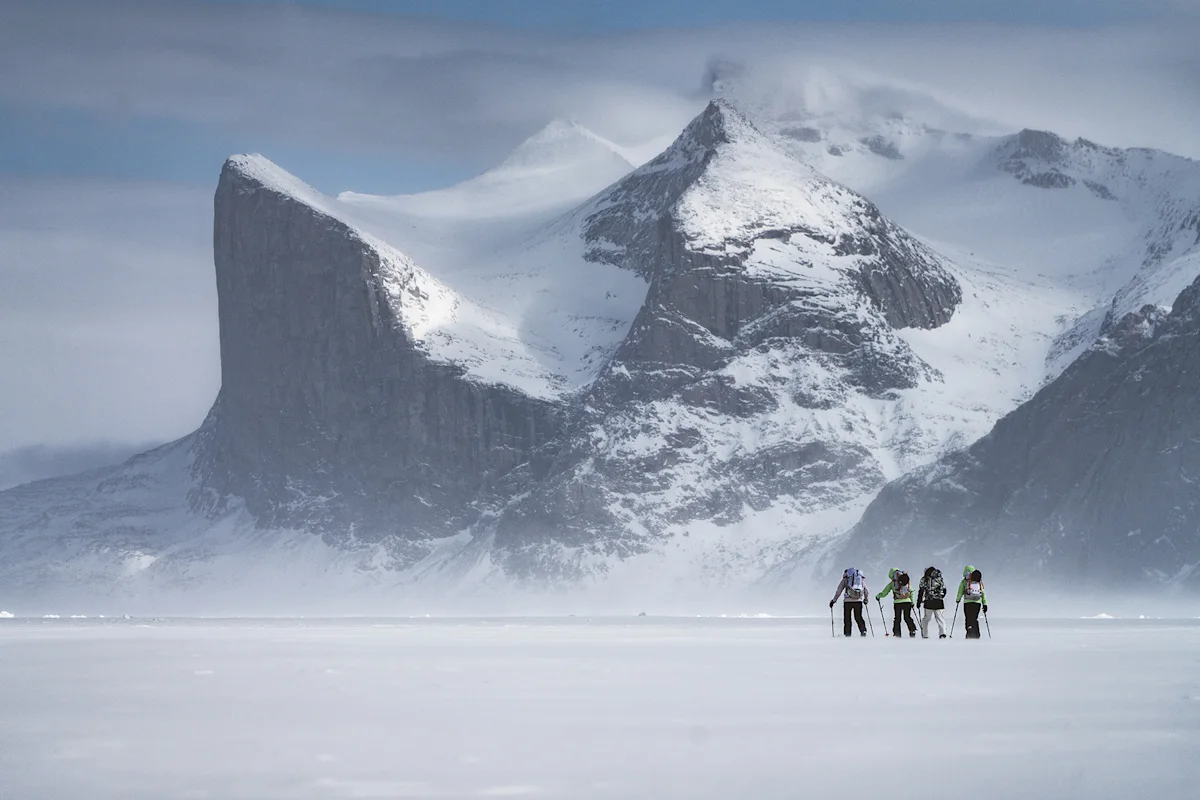
There is a telling moment in The North Face’s latest mountaineering documentary, Trango. As Christina Lustenberger, Jim Morrison, and Nick McNutt make an attempt to ascend the film's namesake 20,623-foot Pakistani peak, they observe an avalanche roar down from the vertiginous upper glacier and cascade off a cliff towards a gully in the direction of several members of the support team.
“Holy fuck I hope the porters are out of the way,” says Lustenberger. She shouts down the mountain and strains to hear a response.
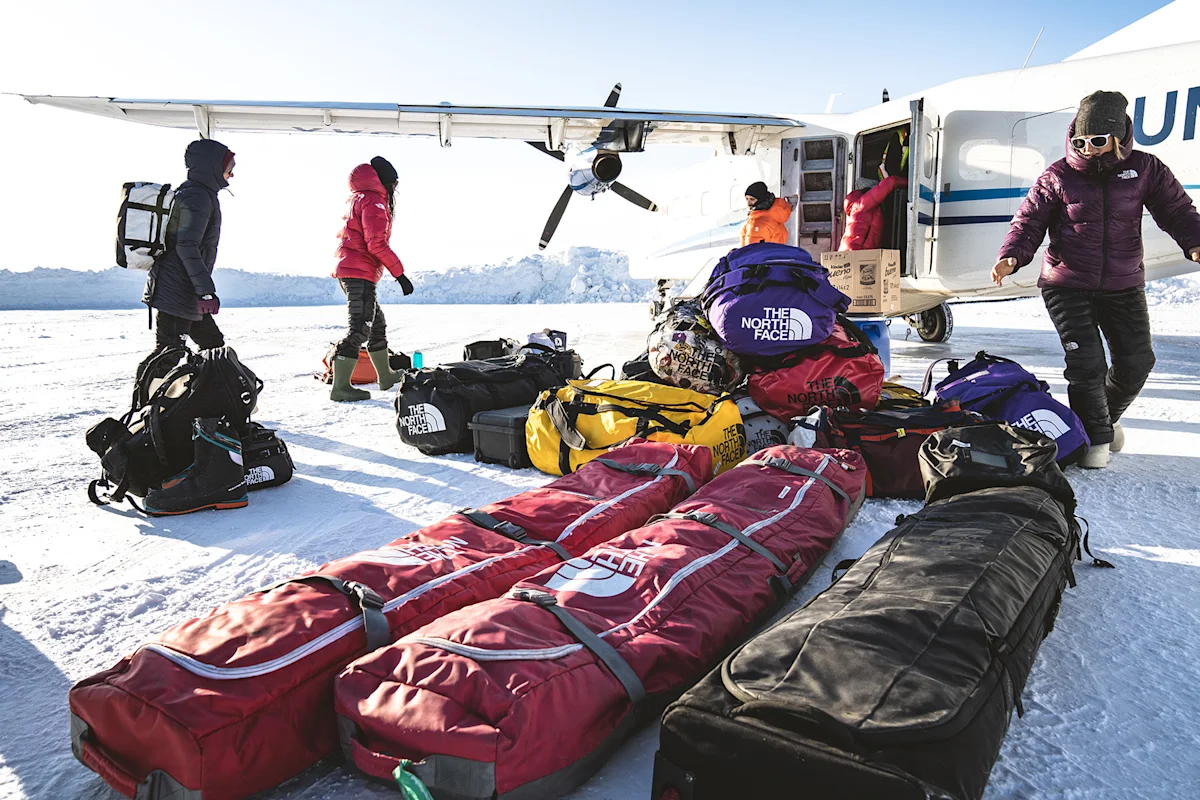
Spoiler alert: In the end, the avalanche misses the crew. But the momentary rupture of the fourth wall reminds the viewer of the stakes when elite athletes attempt to navigate hostile terrain. The danger of film-worthy expeditions isn't limited to the climbers going for the summit; it extends to the full, sometimes extensive cast of people involved in supporting and documenting the expedition.
Thanks in part to the growing prestige of the outdoor documentary genre, content creation has increasingly become part of elite athletes' sponsorship packages. Free Solo won Best Documentary Feature at the 2019 Oscars, and this January, 6.2 million people tuned in live to watch Alex Honnold climb the 1,667-foot Taipei Tower without ropes in Netflix's Skyscraper Live. It can feel strange and antithetical, in a sport renowned for its purist, dirtbag ethos, to have such spectacles consumed by vast audiences.
For viewers, the incentives and pressures they exert are all behind the scenes. Media production has always been a method of financing and celebrating epic achievements in exploration. Not so long ago, a photo-filled magazine feature was enough to bring brand budget to far-flung expeditions. Not anymore; it's video or it didn't happen. But are documentaries a means of bringing awareness to niche sports and epic feats, or are they increasingly becoming long-form commercials in which brands put athletes in perilous situations to feed the content machine?