How the Rugged Cornwall Coast Influences Cold Water Surf Brand Finisterre

How the Rugged Cornwall Coast Influences Cold Water Surf Brand Finisterre

Author Photographer
  • Eric Greene

Camera
  • Leica Minilux, Nikon FM2
Film
Surfing, fishing, trail running, and going deep on outdoor design at the end of the earth with the UK-based outdoor brand

Published: 04-29-2026

Field Mag may receive a minor commission from purchases made via affiliate links.

Seven-ish hours and a combination of train, bus, and car is what's required to get from London to Cornwall, a long peninsula that stretches out from the United Kingdom's southwest corner into the Atlantic ocean. This anomaly of land has a lush south coast that's moderated by the Gulf Stream to be mild and wet with dense, tropical-like plants. Its north coast is a barren wall of wind-hammered bluffs opening into coves of sandy beaches. Both coasts are magnets for brutal storms, and can be excellent for surfing.

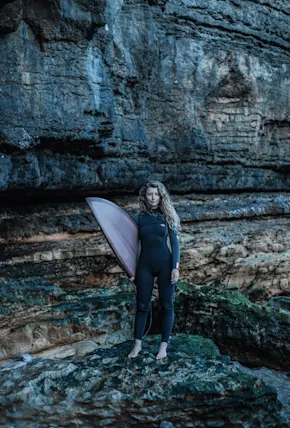
I spent a week during late winter visiting both sides of the peninsula, hosted and guided by the Cornwall-based surf and outdoor brand Finisterre. There I learned that the tip of Cornwall where the two coasts meet has long been known as “Land’s End,” or “End of the Earth.” Or, in Cornish, Penn an Wlas ("end of the land"), and in Latin, Finis Terrae, “end of the earth”—the source of the British company's name. This often harsh location that has retained its remoteness for centuries has shaped Finisterre's distinct identity among a sea of outdoor brands, influencing an approach to making gear that's ideally suited to the most varying and extreme coastal coordinates around the globe.

eric-greene-cornwall-8

The sea container that houses 23 years worth of Finisterre’s product archive at the back of the campus

An Outdoor Brand Shaped by the British Coast

Born in the coastal village of St. Agnes by local surfer Tom Kay, Finisterre started in a rented flat above a village shop with some early iterations of knit sweaters and waterproof jackets designed for the area's extreme environment. Some 23 years later, the brand thrives within a campus of modern buildings built around a condemned tin mine tower on the bluff above the waves of Trevaunance Cove.

I went surfing with Kay in the middle of a workday, which is common practice at the company when the waves are good. Kay is soft spoken and unassuming—a true Cornish surfer. He’s at the campus every day and from what I observed, spends most of his hours greeting and catching up with his team in the way of friends and not colleagues.

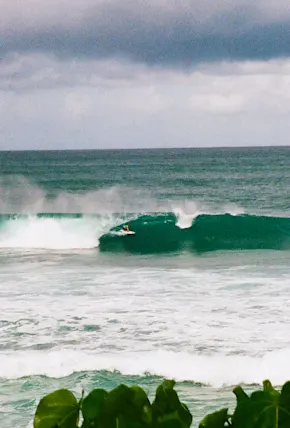
We drove Kay’s van down a winding road into a nearby hidden cove and hiked up a bluff to look at the peaking waves east and west along the coastline before deciding on a good spot to paddle out. It was sunny—a rarity in this part of Cornwall—and the waves were good. Really good. The surf community is notoriously grouchy all over the world, but in Cornwall everyone was happy. First, because I was with Kay, and second, because it was the first sunny day of the year—67 days into it.

eric-greene-cornwall-3

The local beach break in front of the Finisterre campus

I spent three more days hanging around the Finisterre campus, learning about the brand’s approach to designing apparel and equipment for the Cornish environment. The end goal is to create products that get people outdoors year-round, no matter how harsh the weather is. Visiting and surfing with staff gave me a deep understanding of how they’ve collectively poured two decades of experiences from their active lifestyles into refined designs and materials.

Finisterre is environmentally minded, and serious about sustainability practices. The company's high-quality wetsuits use Yulex Natural Rubber, a plant-based alternative to neoprene. Its popular knitwear and traditional Cornish fishing sweaters are made of traceable raw materials from independent wool and merino farmers. (Back in the day, Cornish fishing fleets would use different sweater patterns so that if someone was lost overboard, they could later be identified by the pattern—if they were found.) Adele Gingell, head of positive impact at Finisterre, sat with me for an hour to share how these design and production practices maintain the brand’s Certified B Corp status while prioritizing sustainable practices.

eric-greene-cornwall-9

Finisterre founder Tom Kay

eric-greene-cornwall-13

Patching garments in Finisterre’s Lived & Loved studio

Getting a peak behind the curtain of the Finisterre design archive revealed how the brand got to where it is today. Andrew Todd, head of design, walked me through a 23-year history of seasonal collections; time capsules housed in a black sea container at the back of the campus. The semi-organized racks and shelving are filled with past collaborations with brands and designers including Vans, Snow Peak, Christopher Raebrun, Palladium, Bowmont, Lucas Beaufort, and more. Some pieces are one-offs that never reached the market. The container is an impressive timewarp that preserves Finisterre’s history of blending fashion culture, technical outdoor design, and Cornwall’s fishing heritage.

The next stop on campus was the Lived and Loved studio, adjoined to Finisterre's St. Agnes retail space. It’s a craft room where customers from all over the world send in hard-worn pieces for repairs, mending, and patchwork. Post boxes stuffed with damaged rain jackets, denim, and wool shirts are unpacked to be hand-sewn and patched back together, then the unique alterations are mailed back for another cycle of outdoor use. The incoming boxes pile up every day.

eric-greene-cornwall-10

Cornish streets are lush year-round

Fishing & Running the Cornwall Coast

After working my way through the campus and sneaking in several surfs with the staff, I left St. Agnes for Penzance, a harbour town that’s survived off fishing and mining since the 14th century, on Cornwall's south coast. It’s a quiet place in the winter, where the most life is found inside the many fisherman pubs. In the summer, it’s a tourism magnet for beachgoers and sightseers visiting the art deco Jubilee saltwater pool and St. Michael’s Mount, a medieval castle built on a tidal island in a sandy bay that often has decent surf.

I joined the Finisterre marketing team at a launch event for the brand's latest collaboration, an Ankle Deck Boot made with Xtratuf, at the famed Argoe restaurant in the neighboring village of Newlyn. The marina-side dining room is in the Michelin Guide and has a unique menu of local seafood and natural wines. We feasted family-style on fish soup, charred monkfish, scallop butter, and grilled hake throats. For a tiny and unassuming spot, the big vibe is known to everyone in Cornwall.

eric-greene-cornwall-4

Trevaunance Cove in St. Agnes

eric-greene-cornwall-2

One of the many watering holes in Penzance

The morning after our dinner, I walked downhill to the docks for a fishing excursion with the marketing team and Argoe’s owner, Rich Adams. We bounced into the wind towards the end of the earth and learned about the sustainable fishing practices the local lines people are hoping will improve the fish supply that commercial habits have nearly decimated. Still, local fishers pull in 30-plus species of sea life along the Penzance coast. We caught nothing, but that didn't stop us from filling up on proper Cornish pasties when we returned to land.

Like everyone else, I bought running shoes during the pandemic and have become a rabid trail runner in the years since. I brought my On trail shoes to Cornwall, which is a paradise of coastal trails. The South West Coast Path is the big one, hugging the edge of the peninsula for 630 miles through Cornwall, Devon, and Dorset from Minehead in Somerset to Poole in Dorset, challenging anyone who takes to it with 100,000-plus feet of elevation gain along the way. It’s one of the longest footpaths in the world, attracting seasonal hikers from across the globe who spend up to eight weeks following signs posted with its acorn icon as they go end-to-end.

eric-greene-cornwall-15

Dropping lines and hoping for fish off the shore of Newlyn

Each January, the UTMB World Series hosts the Arc 100, a 100-mile ultra race on the South West Coast Path branded as “The UK's toughest winter footrace.” Luke Caddel, Finisterre’s community manager, leads a local run club in the nearby town of Falmouth and competed the race this past year during a savage wind and rain storm. He summed up the race as brutal, iconic, and life changing.

I ran chunks of the path every day I was in Cornwall, taking the long way to the Finisterre campus from where I was staying, and later exploring the empty coves while visiting the south coast. Some days I saw no one, and others I saw a few runners and power hikers wearing hydration vests and always pausing to say hello. The beauty of the path is stunning; lush, dense, and muddy on the south coast; wide open with endless vistas atop the ridges on the north. When I wasn't running, I lived in the Ankle Deck Boot—the perfect footwear for Cornwall’s consistently wet ground and mud.

eric-greene-cornwall-14

The peak of the Beacon Trail in St. Agnes

eric-greene-cornwall-5

Deep in the forest on the South West Coast Path

After my week with Finisterre going all-in on fresh local food, raw outdoors, and slow living immersed in the rural lifestyle at the end of the earth, I hopped the trains and buses north to London—back to where many of the Finisterre staff originally came from before they discovered Cornwall, fell in love, and ended up in a new life at the campus.

It’s natural to feel the allure of Cornwall. The environment is similar to where I live in the Pacific Northwest (lots of rain), but also entirely its own, shaped by its unique geographical coordinates. There’s no coast like it, and it captivated me within a few days. On the train northeast, I researched surf spots I didn’t get to with Kay and sections of the South West Coast Path I’m determined to log muddy miles across during some yet-unplanned future visit. Cornwall's charm—slightly nebulous, and existing within the wondrous environment and the slow-paced community that's grown there—is proven by how many visit, fall in love, and stay forever. It's safe to say it took hold of me too.


eric-greene-cornwall-12

Surf check with Tom Kay

Finnisterre Founder Tom Kay’s Guide to Cornwall

  • Best time to visit Cornwall: If you can, come in September. The sea is still warm from summer, the first proper autumn swells start rolling in, and most of the summer crowds have gone home, so you get the best of everything without the chaos.
  • Where to surf: I usually end up at Chapel Porth Beach, just around the corner from St. Agnes Beacon. It’s a great little spot and there’s a beach café right in the carpark to warm up after surfing.
  • Where to eat: Argoe in Newlyn. It’s great fin-to-gill sustainable fish eating.
  • Where to hike: In the evenings, I love walking up to St. Agnes Head. It’s up high above the cliffs, right by the old Wheal Coates Engine House. On a clear day, you can see all the way down to St. Ives and up towards Trevose Head. It’s pretty special.
  • Best coffee: The Sorting Office is my go-to. Great coffee, no fuss.
  • Best beer: You can’t beat The Driftwood Spars. It’s a proper old-school Cornish pub. Wood fire going, carpets, lifeboat photos on the walls… It’s exactly what you want after a long day outside.
  • Best bakery: Ann’s Pasties. Grab a pasty and you’re sorted.
  • Pro tip for local etiquette: Just be friendly. Smile and have a chat. If you’re surfing, call people into waves. It goes a long way.
  • Best authentic gift to take home: Pick up a jar of St. Agnes Honey in a local shop. It’s made locally by my friend Nick up on The Beacon. The real deal.

Up in London, Purple Mountain Observatory is using thermo-mapping fabrics, fashion-informed silhouettes, and group hikes to explore accessibility through performance apparel.